
A small bathroom is harder to design than a big one. Every tile choice has more visual weight, every line of grout shows, and every layout decision affects how the room reads. That's also what makes a good small bathroom so satisfying when it's done well.
This post is the version we'd hand to a homeowner planning a small bath remodel on the South Shore, before they get lost in inspiration photos. It covers the right tile choices for floors, walls, and showers in a small space, what to avoid, and how to think about scale, color, and grout in a room that's already tight. We've completed 400+ bathrooms across the South Shore and Greater Boston in our 20 years, so the recommendations below come from real-world wear, not just from what photographs well.
Start with the room, not the tile
Before we get into specific recommendations, the most useful thing we can tell you is this: the right tile for your bathroom depends on three things about the room itself.
How small is small? A 5x7 foot hall bath is a different problem than a 35 square foot powder room or a 7x9 primary bath. The advice for a tiny powder room is mostly visual (small bathroom, big design moment). The advice for a 5x7 hall bath is mostly practical (durability, ease of cleaning, scale).
How much natural light? A small bathroom with a window is much more forgiving with darker tile than one without.
How much actual use does it get? A guest powder room can take a more delicate tile. A kids' bath where wet hair and sandy feet land daily needs something tougher.
Once you have the room in mind, the tile choices get a lot easier.
Floor tile for a small bathroom
For most small South Shore bathrooms, we recommend porcelain tile for the floor. Here's why and how to choose it.
Why porcelain over ceramic
Porcelain is denser, harder, and less porous than standard ceramic. It handles water better, scratches less, and lasts longer. For a bathroom floor, especially one that gets daily use, the long-term performance is worth the modest price difference.
Scale: smaller usually reads bigger (counterintuitively)
A common assumption is that big tiles make a small room look bigger. That's true on walls, but on floors it depends. A 12x24 inch tile installed in the right direction can elongate a small bath. A small mosaic floor (penny round, hex, square mosaic) can also work beautifully because the visual texture adds detail without adding visual weight. The wrong choice is a medium tile (like an 8x8) that's neither one thing nor the other.
For most of the small primary baths we build on the South Shore, we land on either:
- A larger format porcelain (12x24 or 24x24), running the long dimension of the room.
- A small-scale mosaic (1 to 2 inch tiles in marble, ceramic, or porcelain), which adds texture without overwhelming.
Slip resistance matters more in a small bath
Bathroom floors get wet. Look at the DCOF rating of any tile you're considering (Dynamic Coefficient of Friction). For a wet bathroom floor, you generally want a DCOF of 0.42 or higher. Most reputable tile manufacturers publish this. Smooth, polished tiles can be beautiful but slippery, especially in a smaller bath where there's less room to maneuver.
Heated floors are worth considering
Electric radiant floor heat under tile is one of the most-loved upgrades we install in small Massachusetts bathrooms. The cost to add it during a remodel is relatively modest, the installation is straightforward, and the comfort level on a January morning is significant. If you're already doing the floor, doing it once is much cheaper than doing it twice.
Wall tile: where to go big and where to hold back
The biggest mistake we see in small bathroom remodels is too much tile on too many walls. Tile every wall floor to ceiling and the room reads cold and busy. Use tile strategically and the room reads thoughtful and bigger.
Where wall tile belongs in a small bath
The shower or tub surround. Always tile here. Water needs it, and visually this is your design moment. Most of our clients run shower tile floor to ceiling for a clean look (and easier cleaning).
A single accent wall. In a small bath, one tiled wall (often the wall the vanity sits against, or behind the toilet) can add depth without overwhelming. A textured tile, a vertical-stack pattern, or a fluted finish reads as a design feature rather than a tile-everywhere statement.
Wainscoting. A 36 to 48 inch tall band of tile on lower walls, capped with a quality bullnose or trim piece, adds durability where splashes happen and visually grounds the room.
Where wall tile usually doesn't belong
Every wall, full height. It looks great in magazine photos and overwhelms in real rooms.
The ceiling. Almost never the right call in a small bath unless you're building a steam shower (a different category of project).
Color and contrast in a small bath
White tile in a small bath is timeless for a reason. It reflects light, doesn't fight other materials, and ages well. But "all white everything" can read flat. The small baths we like best usually have:
- A neutral light tile on most surfaces.
- One area of contrast (a darker floor, a darker accent wall, a colored vanity) to give the eye something to land on.
- A consistent grout color that doesn't fight the tile.
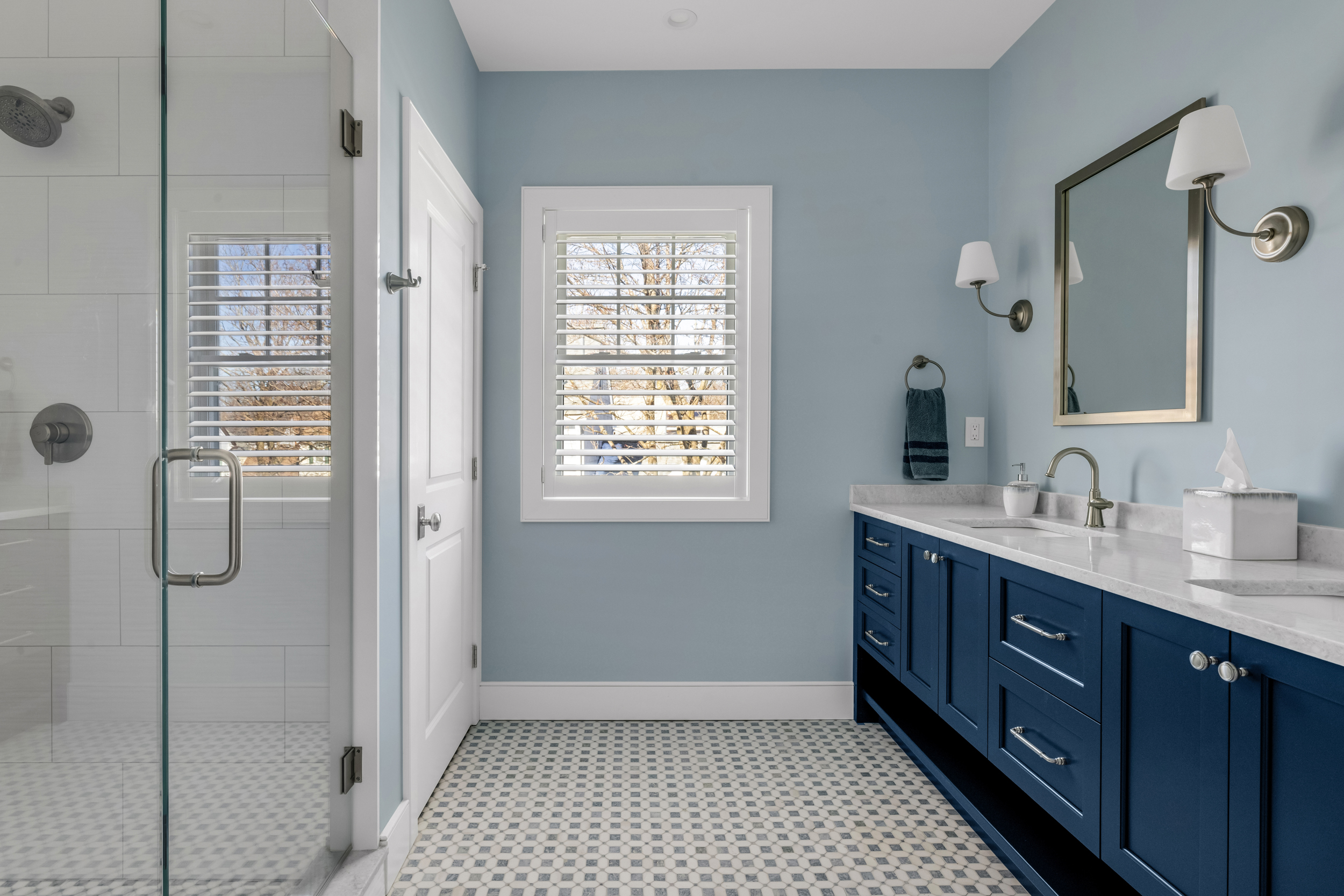
A small bathroom in a coastal South Shore home (Cohasset, Scituate, Marshfield) often does well with a soft white or cream tile, a touch of navy or sea-glass blue somewhere, and a warm wood vanity. That's a familiar palette but it works because the proportions are right, not because it's a trend.
Shower tile: the place to spend a little extra
If you're going to spend more on tile in any part of a small bath, the shower is where to do it. Here's the framework we use:
Larger format on the walls, smaller format on the floor
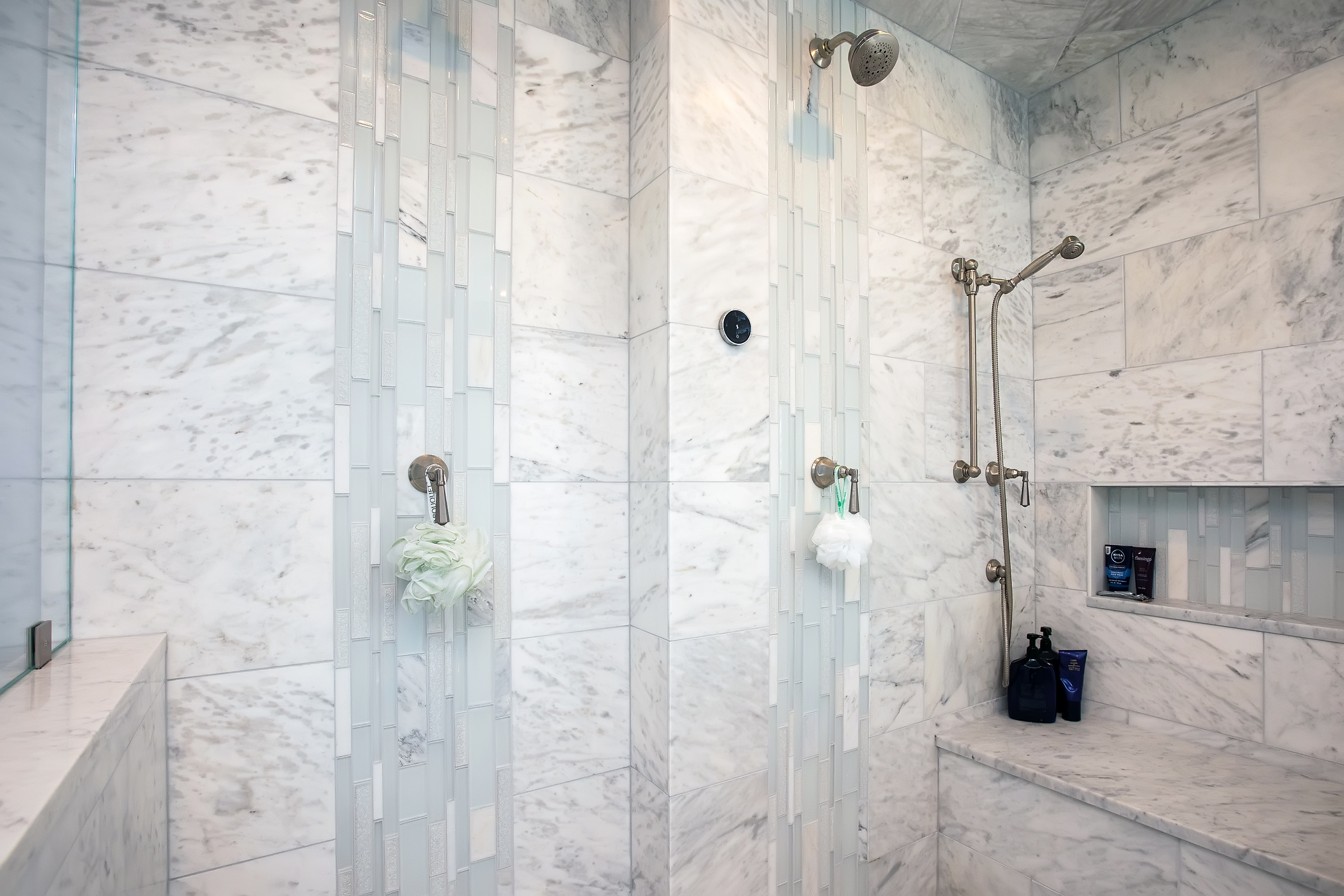
Larger tiles on shower walls (12x24, 4x12, 6x12) mean fewer grout lines, easier cleaning, and a cleaner look. Smaller tiles on the shower floor (mosaic squares, hex, penny round) give you the slip resistance and the slope-to-drain you need without sacrificing visual quality.
Niches matter
In a small shower, a built-in niche (recessed shelf for shampoo, soap, etc.) is the difference between a finished design and one with bottles balanced on the corner of the bench. We almost always include at least one niche, sized to fit the bottles you actually use, with the same tile or a contrasting accent inside.
Grout color matters more than people think
Light grout with light tile reads cleaner. Dark grout with light tile reads more graphic and can hide soap scum, but it also dates more obviously. For most small showers, we recommend a grout color that's slightly darker than the tile, in a shade that won't yellow over time. Epoxy grout is more expensive than standard cement grout but holds up much better in shower applications.
Frameless glass changes the math
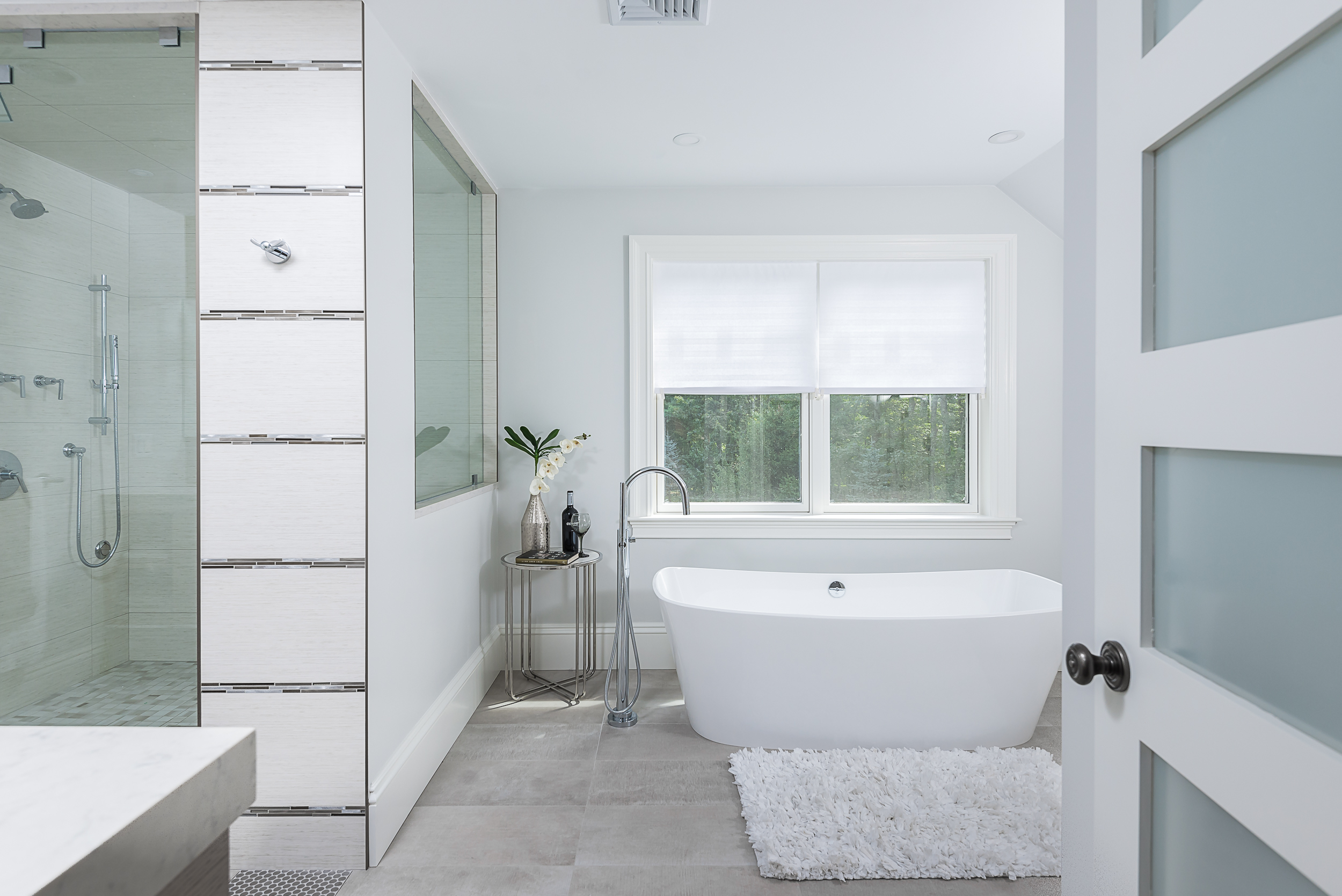
If you're doing a frameless glass shower enclosure (very common in modern small bathrooms), the tile inside the shower becomes part of the visual room. That's a reason to be more thoughtful about it, not less. The tile you pick is going to be visible from the doorway, so it has to relate to the rest of the bathroom.
A few specific recommendations
These aren't trends. These are tile choices that have aged well across many South Shore projects:
For a hall bath floor: A 12x24 porcelain in a soft warm gray or off-white, run on the long axis of the room. Pair with light grout and matte finish for forgiveness.
For a primary bath floor: A small-scale marble mosaic (carrara or thassos in penny round or 2x2) for a classic look. Pair with a tile shower wall in a complementary larger format.
For a powder room floor: Go bolder. A small space is the right place for a patterned cement-look tile, a graphic mosaic, or something with real personality. The room's small enough that "too much" can actually be just right.
For a shower wall: A 6x12 or 12x24 in a soft white or cream, vertical stack or running bond pattern. Add a niche with a contrasting mosaic or a vein-cut marble for a subtle moment.
For a shower floor: Mosaic for slip resistance and slope. Marble for warmth, porcelain for budget, glass mosaic for shimmer.
Need help comparing tile options for your bath? Schedule a showroom visit at our 5,000 square foot showroom in Norwell. We have a full tile library where you can compare options side by side. No pressure, just a real conversation about your home.
Small bathroom tile mistakes we see often
A few things that come up regularly when people show us inspiration photos:
Too many materials. A small bath with three different tiles on the floor, two in the shower, a third on the accent wall, and a fourth on the vanity backsplash is a kitchen-counter spec sheet, not a finished room. Pick two, maybe three, and let them do the work.
Mismatched scale. Tiny mosaic on the floor and chunky 18x18 on the walls fights itself. The scales should relate.
Trendy patterns that won't age. A bold cement tile pattern is great for five years and then dates fast. In a forever home, the tile you pick should still feel right in a decade. Trends are fine in places that are easy to change (paint, accessories). Tile is hard to change.
Cheap grout. Standard sanded cement grout in a shower will discolor in three to five years. Epoxy grout costs more upfront and saves you from regret later.
Missing the slope. A shower floor needs to slope to the drain at 1/4 inch per foot. A floor that doesn't slope correctly will hold water no matter how nice the tile is.
What we typically do at Transitions
The tile selection in our 5,000 square foot showroom in Norwell includes porcelain, ceramic, marble, glass, and specialty materials in a wide range of sizes, finishes, and price points. We carry Soho, Daltile, and MSI International as our primary tile brands, plus specialty stone and glass mosaics. For plumbing fixtures we work with Rohl, Riobel, Victoria + Albert, and Kohler, which lets us coordinate finishes across the whole bath.
When you come in, we walk you through what fits the kind of bath you're planning and what fits your budget. For a small bath, we'll usually pull two or three combinations and let you compare them as a package, not just as individual tiles. A floor tile that looks great alone can fight a shower wall that also looks great alone. The right choice is the one where they work together in your room.
A full bathroom remodel includes a hand-drawn tile layout as part of the design package, which is one of the unsung details in a small bath: getting the cuts right at niches, corners, and the shower curb is what makes a small bathroom read as carefully designed rather than just nicely tiled.
Three ways to work on your bathroom
We offer three service tiers for bathrooms, depending on scope:
- Bathroom Remodel. A full design-build, from the studs out. New layout, plumbing, electrical, tile, vanity, fixtures.
- Bathroom Refresh. Same footprint, new finishes. Vanity, tile, lighting, fixtures swapped without moving plumbing or walls.
- Vanities & Countertops. We design, source, and deliver. Ideal for larger or specialty bathrooms where you want premium materials and have an installer.
Tile is included in the first two; the third is materials-only.
Talk through tile with a designer
A small bathroom is the right place to be deliberate. If you're planning a remodel and want to talk through tile options with someone who's worked on a lot of South Shore baths, we'd love to talk.
Schedule a showroom visit at our 5,000 square foot showroom in Norwell. We'll help you compare options for your space and your budget. No pressure, just a real conversation about your home.
Transitions Kitchens, Baths & Remodeling
433 Washington St, Norwell, MA
(781) 871-0881


.jpg)