
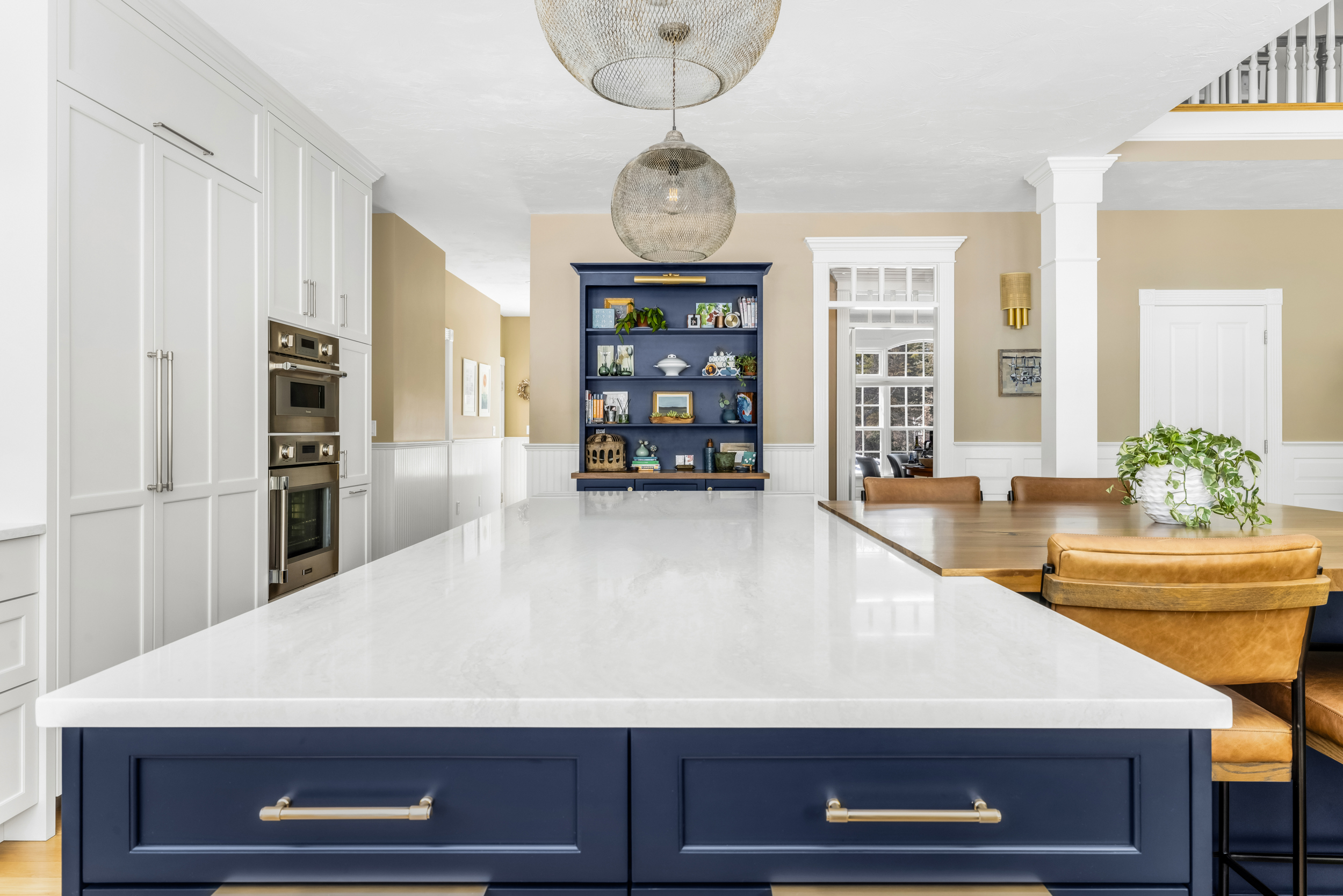
Layout is the decision that affects every other decision in a kitchen remodel. Get the layout right and the cabinetry, lighting, traffic flow, and entertaining all fall into place. Get it wrong and you're working around the problem for the next 20 years.
This is the version of the kitchen layout conversation we wish more homeowners had before their first design meeting. We'll walk through the four most common layouts (galley, L-shape, U-shape, and island-anchored), the kind of room each one fits, and the trade-offs that don't always show up in a finished photo. The recommendations below come from 800+ kitchens we've designed and built on the South Shore since 2006.
What "layout" actually means
When designers say "kitchen layout," they're usually talking about three things at once:
- The shape of the cabinet runs. Where the cabinets and appliances physically sit.
- The work triangle. The relationship between the sink, the range, and the refrigerator. Older design schools obsessed over this; modern design treats it as a guideline rather than a rule.
- How the kitchen connects to the rest of the house. Open to a family room, separated by a peninsula, walled-off entirely. This is often the most important variable, especially in older South Shore homes that originally had small, closed-off kitchens.
A good layout serves the way you actually live, not the way a finished photo suggests you should.
The four common kitchen layouts
1. Galley kitchen (two parallel runs)
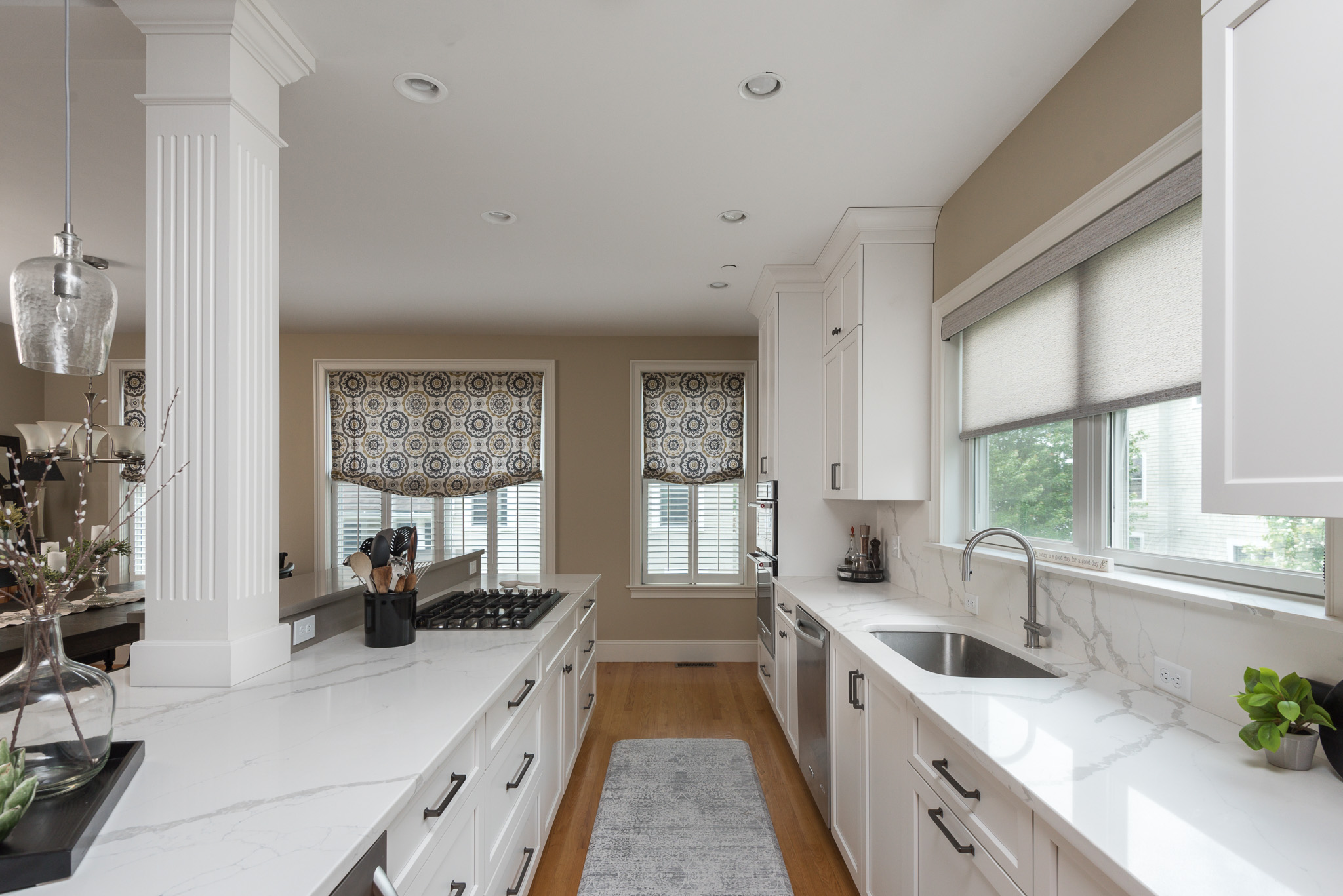
Two cabinet runs facing each other across a corridor. Compact, efficient, and historically common in older homes (especially smaller capes and city condos).
When a galley works well:
- The room is genuinely a corridor. Trying to force a galley into a wider square room creates dead space.
- Only one or two people cook at a time.
- You don't entertain in the kitchen.
- You want maximum counter and cabinet density per square foot.
Trade-offs:
- Limited social space. There's nowhere for a guest to perch with a glass of wine.
- Two-cook traffic gets tight fast.
- No island, by definition.
A common South Shore example: A 1950s cape in Hingham or Scituate where the kitchen sits between the dining room and the back of the house. The galley gets the most function out of the space, but if you're opening the wall to the dining room, the galley often becomes the start of a different layout.
2. L-shape (two perpendicular runs)
Cabinets on two adjacent walls, meeting in a corner. Typically opens into a family or dining space on the other two sides.
When an L-shape works well:
- The room is roughly square or moderately rectangular.
- You want an open feel without committing to an island.
- You want the kitchen to flow into a family room or dining area without a hard separation.
- One or two cooks, with social space adjacent.
Trade-offs:
- The corner is always a design problem. Lazy Susans help, but no corner cabinet is as efficient as a straight run.
- Counter space is limited compared to U-shape or island layouts.
- Less storage density than U-shape.
L-shapes work especially well in homes where the kitchen has been opened up into a family room. The two walls of cabinets handle storage and prep, and the open floor plan handles the social and dining functions.
3. U-shape (three runs, open on one side)
Cabinets on three walls. Maximum storage and counter density. Typically appropriate for medium to large kitchens.
When a U-shape works well:
- Storage is a top priority (large family, serious home cook, dedicated baking, lots of small appliances).
- The room is large enough that three runs of cabinetry don't make it feel boxed in.
- One main cook who values workflow efficiency.
- The kitchen is somewhat separate from the main living areas.
Trade-offs:
- Can feel closed-off in a smaller room.
- Two corner conditions instead of one, so you're managing more dead space.
- Less natural seating or social space unless one of the runs has a peninsula.
U-shapes are common in larger Massachusetts colonials and some shingle-style coastal homes where the kitchen has its own room and isn't trying to also be the family room.
4. Island-anchored layouts (often L-shape or U-shape plus an island)
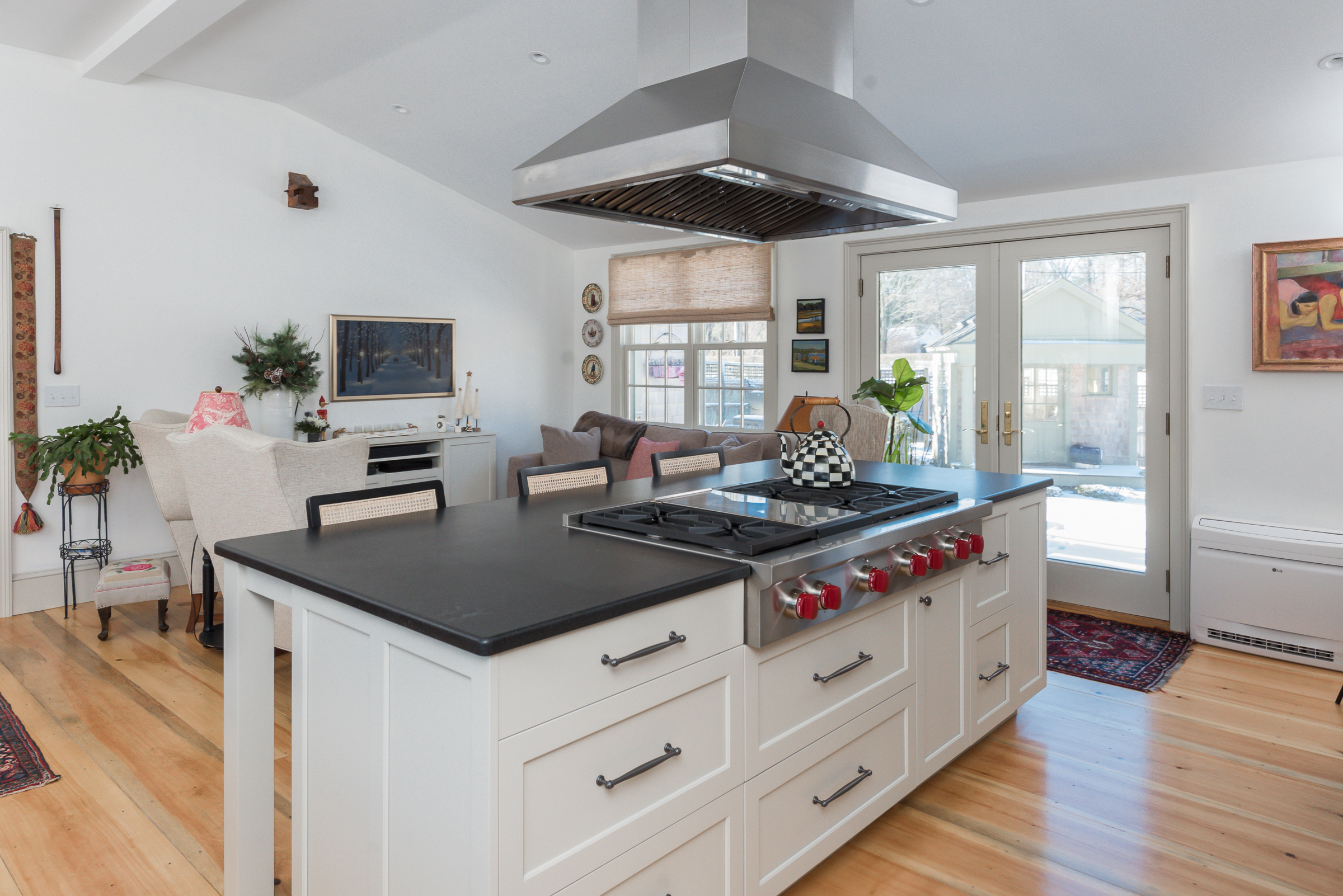
Most modern South Shore kitchen remodels are some flavor of island-anchored. The cabinets run along one or two walls, and a freestanding island sits in the middle of the room, often with seating on one side, prep space on the other, and sometimes a sink or cooktop integrated in.
When an island works well:
- The room is at least 12 to 13 feet wide. Smaller and the island starts to crowd traffic.
- You entertain in the kitchen and want seating that doesn't require setting a dining table.
- You want a clear separation between prep work and casual hangout space without putting up a wall.
- You're opening the kitchen to a family room or dining area.
Trade-offs:
- Islands need clearance. 36 to 42 inches between island and perimeter cabinets is the comfortable minimum. 48 inches is better for two cooks.
- Adding plumbing or gas to an island can add real cost.
- An island that's too big for the room reads as "we put an island in" rather than "we designed an island."
Most of the kitchens we build on the South Shore are island-anchored, because the typical project involves opening up a closed-off kitchen and the island becomes the natural centerpiece of the new open space.
How to choose the right layout for your room
A simple framework. Before you start designing, answer four questions honestly:
1. How many people cook at the same time?
If it's one person, almost any layout works. If it's two or more (couple cooking together, parent and kids, or a family that hosts holidays), you need either an island layout or a generous L-shape so two people can work without bumping into each other.
2. How much do you actually entertain in the kitchen?
If you host even semi-regularly and people gather in the kitchen, a layout with an island or peninsula is almost always worth it. The seat count at the island is the single biggest predictor of how many guests you'll have hovering during a party.
3. What's the room shape?
A long narrow room is a galley (or a galley + peninsula). A square or rectangular room is an L-shape or U-shape candidate. Anything 12 feet wide and up can support an island. Don't fight the geometry of the room.
4. How does the kitchen connect to the rest of the floor?
If the kitchen is going to be visually open to a family room, that family room is part of your kitchen design whether you like it or not. The sightlines matter. The lighting matters. The flooring transitions matter. If the kitchen stays closed off, it can be more functional and less staged.
Common South Shore layout problems and their fixes
In the Massachusetts homes we work in, we see the same handful of layout problems over and over:
The 1990s peninsula
A peninsula that juts into the room, blocks traffic, and creates a corner you have to walk around. Common in homes built between 1985 and 2005. The fix is usually to remove it and replace it with a proper island, or to remove it entirely and switch to an L-shape opening into the family room.
The closed-off galley behind a load-bearing wall
The original kitchen footprint is fine, but it's separated from the family room by a wall that may or may not be load-bearing. A structural review tells you what's possible. If the wall can come down (often with a beam), the kitchen often goes from galley to L-shape with island. The transformation in how the home lives is significant.
The U-shape that's also the dining room
A U-shape kitchen with a small dining table crammed into the open side. The fix is usually to reframe the U as an L-shape with an island, opening up the dining function into proper space.
The island that's too small
An island that's 4x2 feet in a 16x14 kitchen looks like a piece of furniture rather than a kitchen feature. The fix is to size the island properly (often 6x3 or larger) and design it as the center of the room, not as a side feature.
The island that's too big
A 10-foot island in a 12-foot wide kitchen leaves only a foot of clearance. The fix is to scale it to the room and to traffic patterns, not to the largest dimension that "fits."
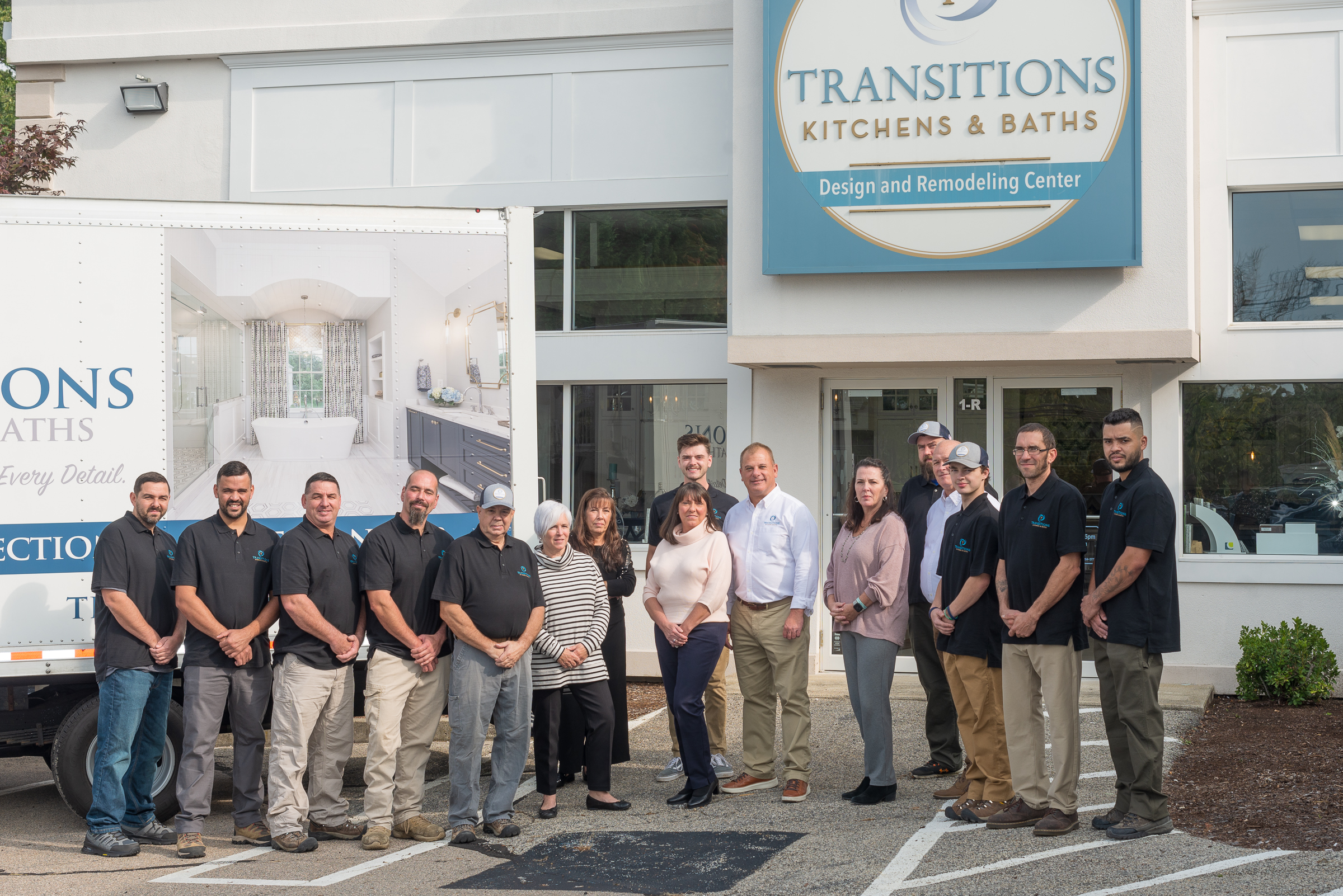
Trying to figure out which layout fits your room? Schedule a showroom visit at our 5,000 square foot showroom in Norwell. We can sketch options on real plans and walk through what's actually possible. No pressure, just a real conversation about your home.
Things designers think about that homeowners often don't
A few details we always look at when planning a kitchen layout, that don't usually come up in early conversations:
Refrigerator placement. The fridge should be reachable from outside the main work zone, so guests grabbing a drink don't disrupt the cook. In most layouts, that means at the end of a run, near the entry, not deep in the work triangle. (For appliances themselves, we don't sell them directly, we typically refer homeowners to KAM Appliances locally and coordinate the specs with them.)
Range hood ducting. Where the range goes matters because the hood has to vent somewhere. An exterior wall is easiest. A kitchen island with a downdraft or a duct through the ceiling is more expensive and requires structural planning.
Window placement. A sink under a window is a classic setup, but it's not the only option. If the window is in a less convenient spot, designing around it (or relocating it) is part of the conversation.
Counter-to-window heights. Backsplash height changes when there's a window above the counter. We often pull the window sill up to align with the backsplash height, which keeps proportions clean and avoids a partial-tile situation.
Door swings. Pantries, refrigerators, dishwashers, and oven doors all swing. They can't swing into each other or into traffic paths. This sounds obvious until you see a kitchen where the dishwasher hits the island when it's open.
Outlet placement. Code requires outlets at specific intervals. Code-compliant doesn't mean well-designed. We try to plan outlet placement so charging stations, small appliances, and undercabinet lighting all work without visible cord clutter.
A practical sequence for laying out your kitchen
If you're starting to think about your project, here's the order we usually work in:
- Decide what stays and what changes. Is the room footprint the same, or are walls coming down?
- Choose the broad layout type based on the room shape and your goals (galley, L, U, or island-anchored).
- Place the appliances first, especially the range, fridge, and dishwasher. They're the inflexible decisions.
- Plan the counter zones around the appliances (prep zone next to the range, landing zones near the fridge and oven).
- Add the storage to fill what's left, prioritizing high-use cabinets near the work zone.
- Refine the island size and shape based on actual clearances, not desired dimensions.
- Sketch traffic patterns. Walk through the layout in your head. Two people, three people, holiday-host scenarios.
A good designer takes you through this process. We usually have a layout converging by the second or third design meeting.
Talk through your layout with a designer
Layout is the foundation of every other kitchen decision. If you're in the early planning phase and want a clear-eyed read on what's actually possible in your space, we'd love to talk.
Schedule a showroom visit at our 5,000 square foot showroom in Norwell. We can sketch options, talk through trade-offs, and help you figure out what fits your home. No pressure, just a real conversation about your home.
Transitions Kitchens, Baths & Remodeling
433 Washington St, Norwell, MA
(781) 871-0881

.jpg)