
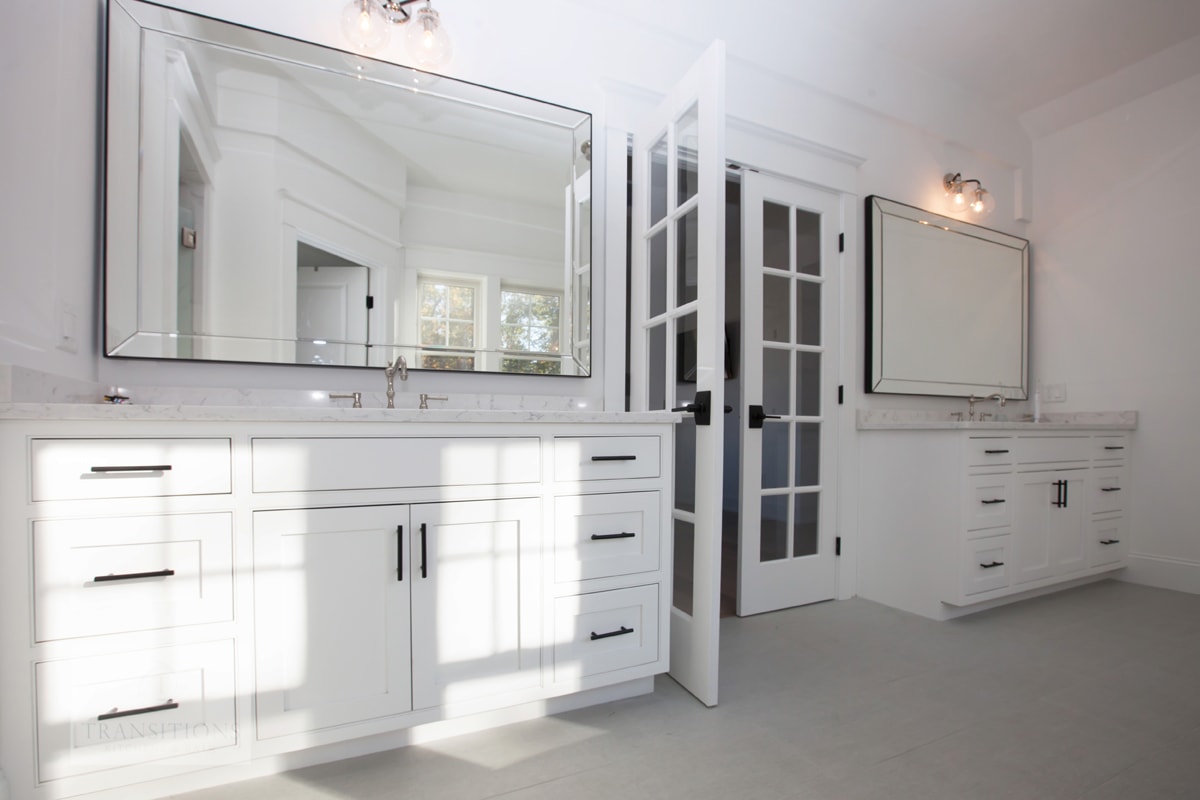
A bath remodel is the perfect time to update both functional and style elements: a new color scheme, fresh tile, updated cabinetry and storage, a larger shower. Depending on space and budget, a new bath design is also the right time to plan for accessibility. If you plan to age in place, or if anyone in your home has limited mobility, then a bathroom designed for accessibility may be the right choice. Accessibility doesn't mean sacrificing style; these changes can be seamlessly incorporated into any style bath.
From floor to ceiling, here are ideas for a stylish and functional accessible bathroom.
1. Floors and Doors
Consider a full bathroom on the first floor so you don't have to worry about going up and down stairs. Doorways should be wide enough for easy access, particularly for a wheelchair or walker. The door should swing fully open without impeding access. A handle is easier to use than a knob when mobility is limited. Within the bathroom, allow ample space to maneuver and access all elements.
The floor should be clear and easy to navigate. Ample storage helps maintain a clutter-free floor; limiting rugs and mats means no tripping. Bathroom floors can be treacherous due to moisture, so opt for a surface with some texture rather than a polished, smooth material.
2. Vanity and Storage
Drawers or pull-out shelves are a better choice for storage, since they let you view and access everything more easily. Customized storage inserts keep everything organized and ready for use.
3. Sinks and Faucets
Create a wheelchair-accessible space by installing a slightly lower sink with no cabinet underneath, with attention to pipe placement. If a wheelchair isn't a factor, just choose a sink height that's easy to reach and clean. An undermount sink meets both requirements; a vessel sink may not. A single-lever faucet is the best choice for ease of operation, or better yet go for a hands-free faucet.
4. Toilet
A standard toilet sits about 14 to 15 inches high; comfort-height toilets are slightly higher at 17 to 19 inches. The higher seat makes it easier for an adult to sit down and stand up. Add grab bars near the toilet to help steady yourself when sitting and standing. Be aware comfort-height may be too high for young children, so keep a step stool handy.
5. Shower, Bath, and Grab Bars
Stepping in and out of a bathtub isn't ideal with limited mobility, but if you still want a bath, make sure you have grab bars or install a walk-in bathtub. The ideal choice for accessibility is a curbless or fully open shower. Add a built-in shower bench or rolling shower seat for a place to sit while washing, and a handheld showerhead. Include grab bars in the shower so you can hold on while moving. Grab bars can match your bathroom hardware and accessories for a cohesive look. Slip-resistant shower flooring is essential.
6. Lighting
Ample lighting is key to moving safely. A large mirror positioned where you can easily see yourself at the sink. Light switches placed for easy access. Toe-kick or under-cabinet lights that can stay on, or sensor lighting that comes on automatically, make accessing the bath at night safer.
Talk through accessibility with a designer
If you're planning a bath remodel with accessibility in mind, we'd love to talk through what works for your home.
Schedule a showroom visit at our 5,000 square foot showroom in Norwell. No pressure, just a real conversation about your home.
Transitions Kitchens, Baths & Remodeling
433 Washington St, Norwell, MA
(781) 871-0881

.jpg)