
The kitchen is the heart of the home, where everyone gathers for meals and conversation. From small children to elder family members to pets, everyone should feel welcome and comfortable. Achieving the right balance of function and style depends on careful layout planning, the right materials, and experienced project management.
Kitchen design requirements may evolve over time, depending on stage of life or family circumstances. This is particularly important if you intend to age in place, or if family members have limited mobility. Pick the right products and surfaces, put them together in a carefully crafted layout, and the kitchen design will stand the test of time.
Get your measurements right
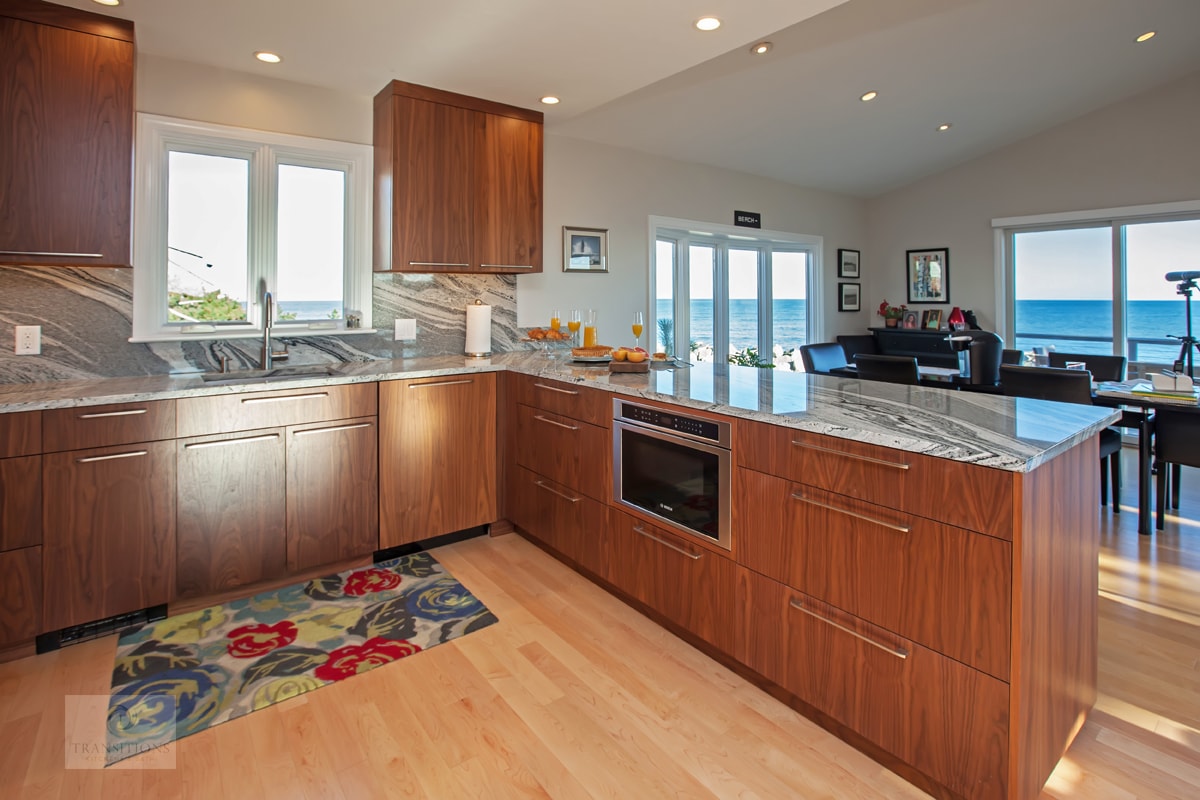
A well-planned layout is the foundation of every kitchen, and especially important when mobility is a consideration. Position items you need to access frequently, like the microwave, at or below counter height. Carefully consider distances between key work zones and ease of access from one to the next: sink to stove, sink to dishwasher to recycling. A pot filler faucet at the range lets you fill heavy pots without carrying them. We dig into kitchen layout in our layout guide.
Make it easy to move around
Once distances and heights make sense, the design should facilitate easy movement. Stick to a simple style with limited adornments, clean lines, and rounded edges on cabinets, countertops, and other surfaces. Fewer things jutting out means fewer accidents and obstacles. An added benefit: a simple style is easier to clean.
Select the right surfaces
Every kitchen is prone to spills from water, grease, and food. Take this into consideration when picking countertops, backsplashes, and floors. Slip-resistant, textured flooring gives a better grip; spills can make a smooth floor treacherous. Stick to countertop and backsplash materials that are moisture and grease resistant and easy to clean.
Make storage accessible
Customized storage solutions matter when accessibility is a priority. Pull-out shelves, lazy Susans, corner cabinet pull-outs, and specially designed inserts make items easy to spot and reach. Cutlery drawers, spice inserts, and tray dividers help. Deep drawers are ideal for heavy pots and pans. A mixer lift accesses heavier items, and pull-down shelving brings upper cabinets within reach.
Get a grip
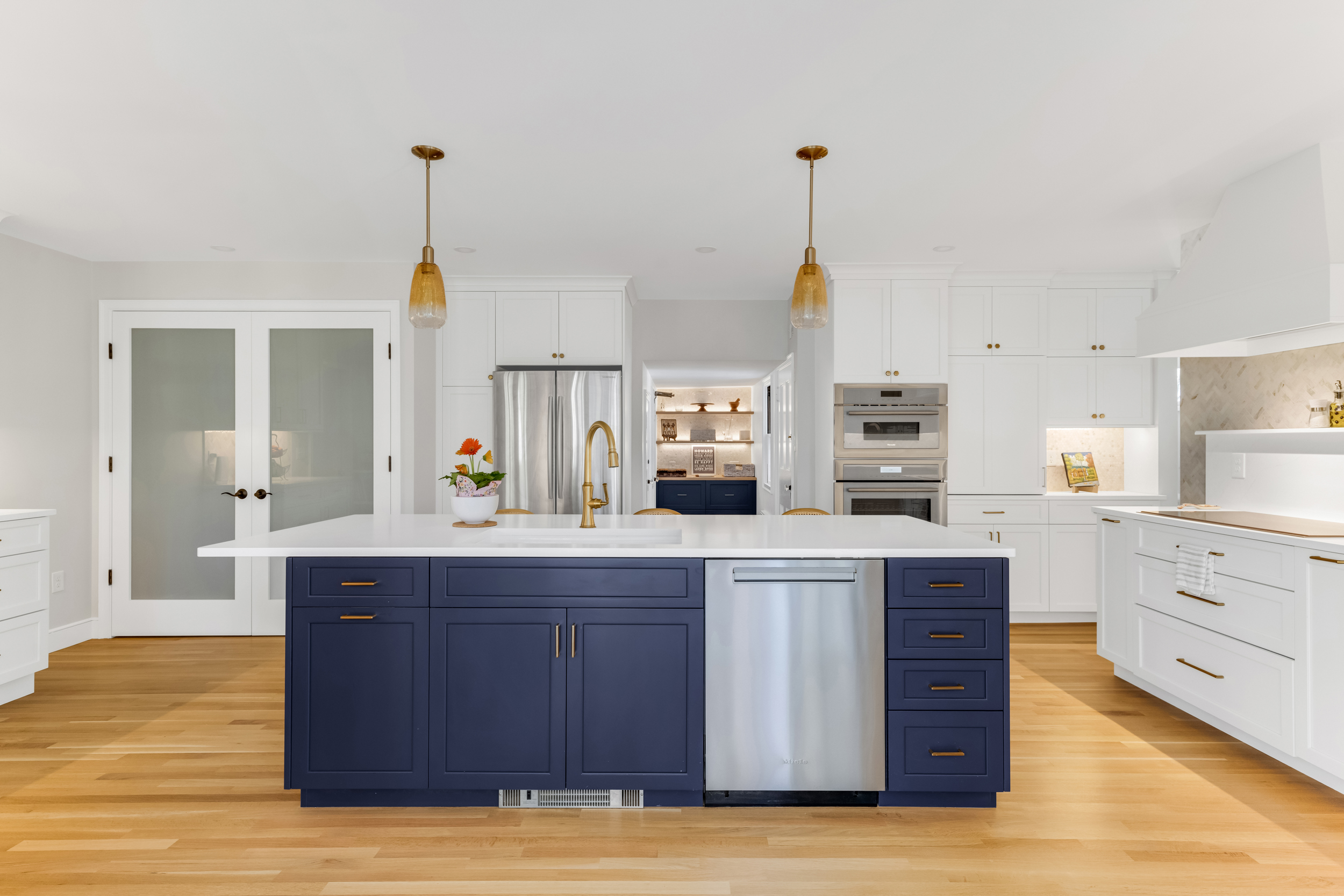
Handles are easier to grasp and operate than small knobs if you have any issues with hands such as arthritis. Stick with handles, pulls, and cup pulls. Single-lever, easy-to-operate faucets work well, or install a hands-free faucet.
Talk through accessibility with a designer
If you're planning a kitchen with accessibility in mind, we'd love to talk through what works for your home.
Schedule a showroom visit at our 5,000 square foot showroom in Norwell. No pressure, just a real conversation about your home.
Transitions Kitchens, Baths & Remodeling
433 Washington St, Norwell, MA
(781) 871-0881

.jpg)