
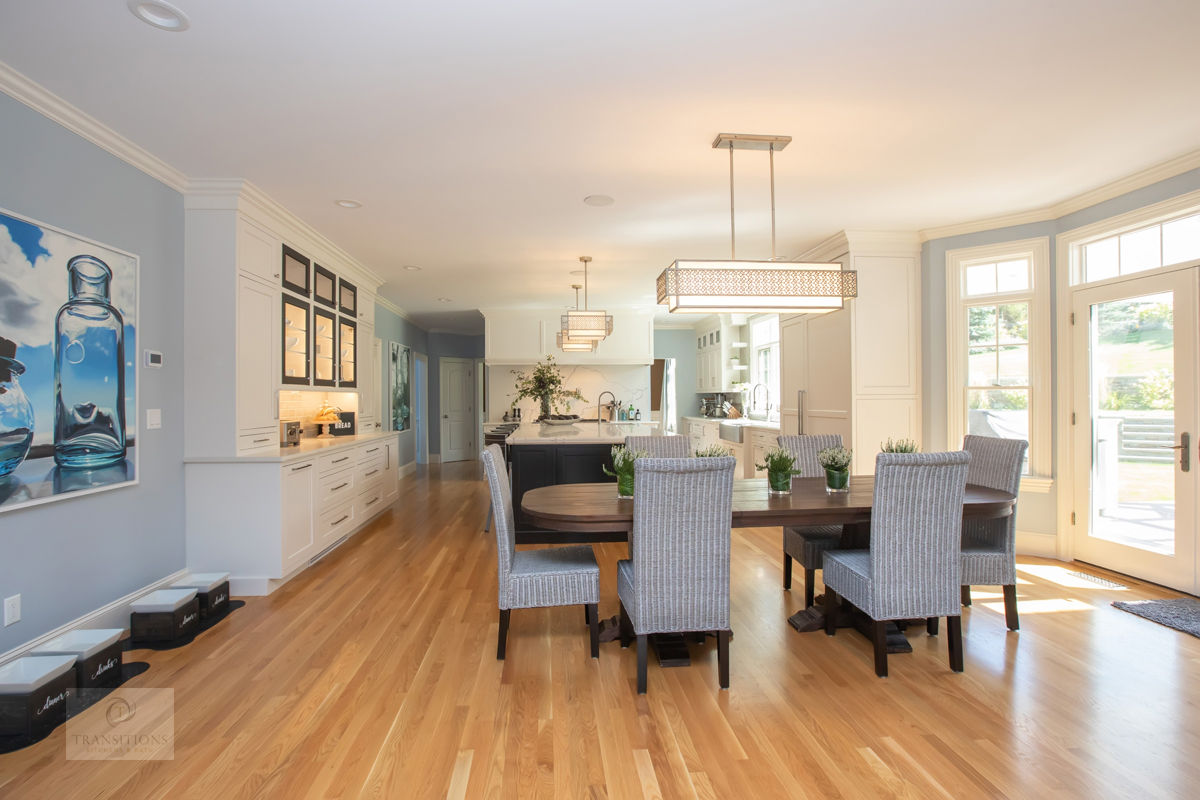
Flooring is a foundational element of any home. It covers a large, central surface area and has to integrate with the design of the room while standing up to wear and tear. Flooring is subject to foot traffic, pets, spills and splatters, and dropped items. Determine how much traffic your room gets, how moisture-prone it is, and whether it's subject to temperature changes before finalizing your flooring choice.
There are many flooring materials available, and finding the right balance of style and durability within budget can be tricky. Our guide to flooring options will help you get started. Then visit our showroom to see materials in person and compare options. Work with a designer to help you make the final selection.
1. Decide what you need
When choosing flooring, consider your functional requirements based on the needs of your household. While you may be focused on style, decide what your must-haves are for moisture resistance, scratch resistance, and ongoing maintenance.
Moisture resistance. Think about the room and what it's used for. If it's a moisture-prone area like a primary bathroom or a kids' bath, take this into consideration. Stick to materials proven to withstand a medium to high moisture environment, like concrete, tile, or vinyl. Also consider texture: a smooth surface like polished tile can be dangerous in wet areas. A textured surface is much safer when spills, splashes, and steam are common.
Scratch resistance. If you have a busy household with kids or pets, consider a more scratch-resistant surface. Ceramic or porcelain tile, laminate, and vinyl plank or sheet flooring are all durable. Tile is highly scratch-resistant but can chip if you drop something heavy. Laminate's scratch resistance depends on the quality of the top wear layer. Vinyl is even more durable and ideal for highly trafficked areas. Hardwood is more scratch-prone, but you can extend its life by sanding and refinishing over time.
Long-term maintenance. Maintenance differs greatly from one material to another. Some materials need special cleaning methods or specific cleaners. Some have specialized long-term needs that have to be followed for the floor to reach its potential lifespan. Investigate these requirements before committing to a material.
2. Figure out your style
Once you understand the practical requirements, look at which style fits your overall design aesthetic. From the classic warmth of hardwood to the customized appeal of tile in colors, patterns, and textures, there's a wide array of flooring options for any style. If you want the look of wood but need greater durability, consider wood-look porcelain tile or luxury vinyl planks.
Decide if you want your floor to blend with surrounding design or stand out. A bold patterned or brightly colored tile looks amazing, but make sure you're happy committing to that look. Flooring isn't easily replaced; it's an investment in the design rather than an accessory you change on a whim. For a more classic look, stick to wood, wood-look, or classic neutral tones.
3. Consider your budget
Flooring is available in a wide range of budgets, with cost based on both price per square foot and installation. Some materials require more specialized installation methods, are more labor-intensive, or need extra materials like underlay.
Understand your budget when shopping. If you have room, spend more on a flooring choice that will enhance the design and last longer. Go for the best you can afford, and if necessary look at alternative materials like vinyl that are more budget-friendly and mimic wood and stone.
4. The main flooring materials
Hardwood
You can't beat the natural beauty of solid hardwood, nor the feel of it underfoot. This warm, elegant material is a classic surface that can be refinished and last for centuries when carefully maintained. Hardwood comes in a range of species with completely different looks, in varying widths and finishes from pale Scandi-chic to traditional dark wood. Oak, maple, walnut, hickory, bamboo, and more.
Hardwood is glued or nailed to a subfloor (typically plywood or concrete) and should be installed by a professional. Leave it in the room for several days so it acclimates, since natural wood expands and contracts with humidity and temperature.
Beyond the obvious appeal of natural hardwood, it can be refinished multiple times. This extends the life of the floor and lets you change the look of a room by sanding and refinishing.
Downsides: hardwood isn't moisture-proof, is susceptible to humidity and temperature changes, and can scratch and warp. In a busy bathroom, hardwood may not be the right choice; opt instead for a wood-look tile. In a kitchen, hardwood works well, especially in an open plan kitchen/dining/living area, but careful maintenance is essential. Put rugs by the kitchen sink and other spill-prone spots.
Engineered Hardwood
Engineered hardwood gives you the appeal of natural wood with greater versatility. It can be installed as a DIY project and is easier to maintain. Engineered hardwood is a veneer of solid wood over a core of high-density fiberboard or plywood. Like hardwood, it comes in planks of varying widths and has the look and feel of solid wood thanks to the top layer. You can even refinish it (though only once or twice, depending on veneer thickness).
Engineered hardwood isn't waterproof but is more resistant to warping, so it can be an alternative to hardwood in moisture-prone spaces. Since the surface is still natural wood, it's still scratch-prone, but more durable than solid hardwood.
Laminate
Laminate flooring takes durability further. It gives the look of wood (or other materials) by using a photo layer on top instead of a natural surface. Laminate has 3-4 layers: a dense core like engineered wood, an image layer that imitates wood, stone, or tile, and a transparent wear layer that protects the image. Some laminates include an extra layer for soundproofing and comfort.
Laminate is highly durable, easy to clean, won't fade in direct sunlight, and is cheaper than hardwood. It handles humidity and temperature fluctuations well, but isn't waterproof and is slippery when wet. Laminate is an ideal choice for busy areas with kids or pets.
Installation is straightforward: a soft underlay with the laminate glued or clicked into place. This is a floating floor since it attaches to itself, not a subfloor. Cheaper laminate looks more artificial, so compare quality within your price range. Unlike hardwood, laminate can't be refinished.
LVT/LVP
LVT and LVP are luxury vinyl tile and luxury vinyl plank. This is a long way from the vinyl you might remember from your grandmother's kitchen. Luxury vinyl has a rigid or flexible vinyl core, a vinyl design layer that mimics natural materials, and a transparent wear layer. Some include an extra layer underneath for durability and comfort.
LVT and LVP come in a range of installation options: floating floor, glued down, or loose lay. They're completely waterproof, relatively inexpensive, highly durable, and convincingly mimic the natural materials they're imitating. Vinyl is plastic, so it's not the most environmentally friendly option and can contain varying levels of VOCs.
Vinyl Sheet
A lower-cost option that's fully waterproof and comes in a wide range of colors, patterns, and textures. As the name suggests, it comes in large rolls and is cut to fit the space. Highly durable and easy to install, but if not installed correctly it can warp. Ideal for a laundry or utility room and works well in a bathroom or kitchen too.
Tile
Many types of tile flooring are available in a range of materials, finishes, colors, textures, and patterns. Tile offers durable, stylish choices to fit any home's style and practical needs. We dig into tile choices in more depth in our small bathroom tile guide.
The top materials for tile floors include:
- Stone tile such as marble, granite, and slate.
- Ceramic tile made of baked clay, available in glazed or unglazed surfaces. Ceramic and porcelain tiles are also available in wood-look surfaces that mimic the appearance of wood in a durable, moisture-resistant material.
- Porcelain tile made of more refined clay and baked at a higher temperature, more durable and moisture-resistant than ceramic.
- Cement tiles, more porous and have to be sealed, but give a beautiful surface that can be refinished.
Tile installation is best left to the experts. It's time-consuming and tricky to lay and grout to a high standard. Tile is ideal in moisture-prone areas and stylish enough for any space. It can be cold underfoot, so consider radiant under-floor heating.
Tile is relatively easy to maintain, though grout lines need to be resealed over time and kept clean. Some tile surfaces like marble are more prone to stains and moisture, so factor maintenance into your decision.
Talk through flooring with a designer
Which flooring is right for you? Look at the space, your lifestyle, available budget, and home's style when making a selection. We'd love to talk through options that fit your home.
Schedule a showroom visit at our 5,000 square foot showroom in Norwell. No pressure, just a real conversation about your home.
Transitions Kitchens, Baths & Remodeling
433 Washington St, Norwell, MA
(781) 871-0881

.jpg)