
Remodeling a primary bathroom is an opportunity to plan a design that's both highly functional and a luxurious retreat. Designing for your own daily use lets you tailor the room to how you actually live. Designing with resale in mind also adds value, since potential buyers can picture the home spa experience.
Whether you're changing the floor plan, designing a new build, or updating the existing space, there are ways to make sure your bathroom reaches its full potential. Toilets, sinks, showers, and tubs come in a wide range of styles and finishes, with fittings and accessories to match.
The color scheme, storage, and flooring you choose all impact the form and function of a primary bath remodel. If you're after a spa feel, quality materials matter more, since they become the focus of a minimalist design.
Here are ten essential elements of a primary bath remodel.
1. A Double Vanity
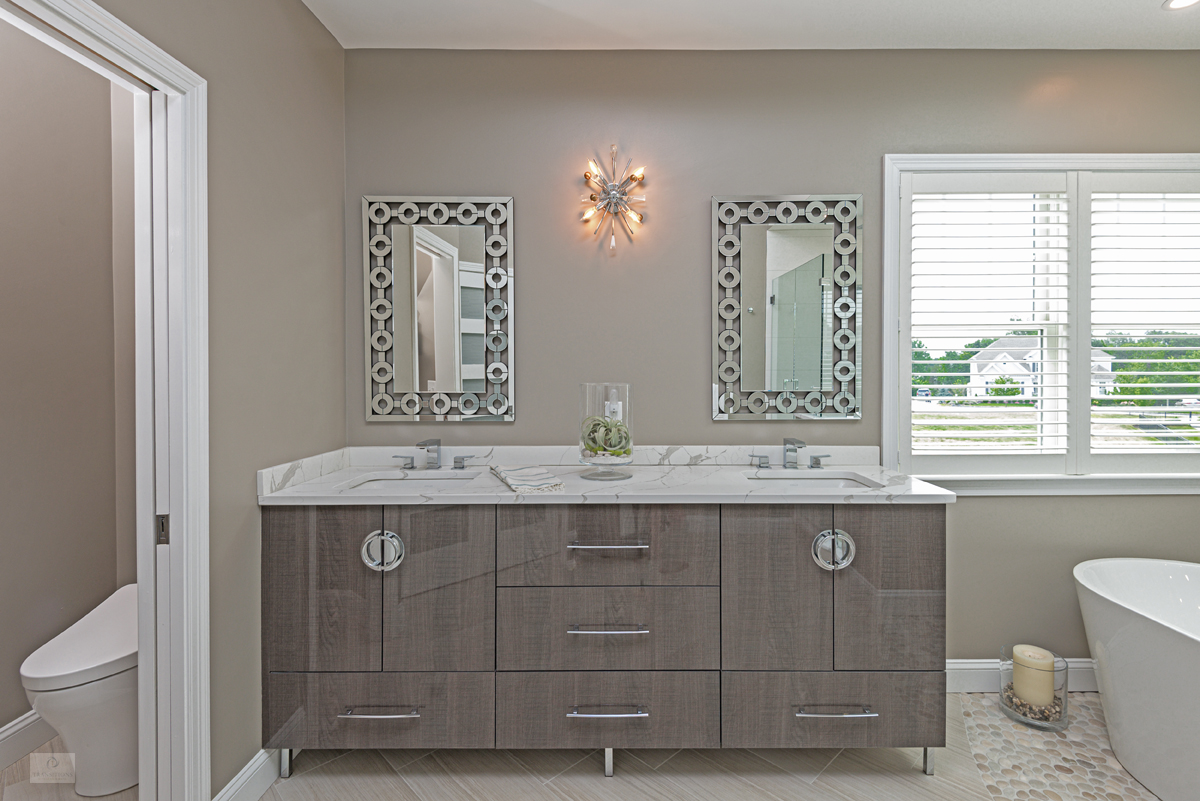
A vanity is the anchor of any bath design. The style you choose helps define the look of the room and provides the storage that keeps it uncluttered. Custom vanities store styling tools and products and keep countertops clear, with charging docks and outlets built into drawers for handy storage and charging.
A double vanity is a perfect solution for a bath shared by two people. Two sinks make mornings and evenings run more smoothly. Pair with a natural stone or engineered quartz countertop and undermount sinks. Vessel sinks add a stylish focal point. Double vanities come in many sizes and don't have to overwhelm the space, and a floating vanity gives the bathroom an airy feel. Quality natural materials let the vanity do the talking without much else needed.
2. Luxury Faucets
Choose a faucet style, material, and finish that complements the room's aesthetic and meets daily demands. Touchless faucets are growing in popularity, easy to use and low maintenance because fingerprints and smudges stay minimal. They're highly functional but also bring style to a primary bath.
The look and finish should complement the sink and other hardware. Brass has been overtaking matte black as the must-have faucet material. Oil-rubbed or brushed brass finishes hide water spots well. Polished chrome and stainless steel are still classic choices.
3. Walk-In Closet
Another stress-busting solution is a walk-in closet connected to the primary bath. Design it large enough for clothes and changing areas for two people. Custom storage means clothes, shoes, and accessories are accessible on busy mornings and easier to put away neatly afterward. Add a seating area with storage benches, a space to iron last-minute outfits, hat stands, coat hooks, jewelry trees. Plan ultimate closet requirements upfront and your designer will work them into the suite.
4. Combination Storage
Installing both open and closed storage gives you the best of both worlds. Closed storage like vanities, baskets, crates, and medicine cabinets keeps things tidy and out of sight. Choose materials for closed storage that suit the bath's overall style.
Open storage takes a little more attention, since items on display need to be arranged carefully and kept dust-free. Small items go in small jars or boxes; liquids look better decanted into stylish dispensers. Open shelving breaks up a blank wall and adds character. As with containers, the items you display contribute to the room's style. Niche shelving in showers and over tubs allows for unobtrusive storage and gives space for an accent tile that adds color or pattern.
5. Stylish Tubs
If you really want to take a primary bath to the next level, a sleek freestanding tub becomes the center of attention. Traditional bathrooms suit a clawfoot model; spa-themed spaces call for a minimalist flat-bottomed tub. Slipper tubs with massage jets let you sink back and relax after a long day. If space is tight and you want a separate shower and tub, consider a Japanese soaking tub. Where possible, place the tub next to a window, ideally on a platform, so you can enjoy the view and natural light.
6. Wet Room
If you're planning for a couple's walk-in closet and a double vanity, consider a wet room with two showerheads for the ultimate primary bath built for two. Smart features like voice-controlled lights, music, water temperature, and pressure round out the experience.
A high-end natural stone or tile floor with a linear drain means no shower door is needed in this low-maintenance design. With no threshold on an open shower enclosure, it's also ideal for an aging-in-place bath if you're planning for the future.
Underfloor heating is worth including in any bathroom and especially a wet room. Install it before the floor is laid; it warms an otherwise cold surface, helps it dry faster, and is more energy-efficient over time.
7. Ventilation
Whether you choose a wet room or a regular layout, ventilation is key. Plan for at least one cubic foot of airflow per minute for each square foot of bathroom. A low-noise model keeps the experience relaxing. Good ventilation removes odors and moisture, gives the bath design longevity, and provides a pleasant atmosphere.
8. High-End Toilets
Toilets are often taken for granted as a functional fixture, but technology and design have brought them to a new standard. Wall-hung toilets give a streamlined look and free up floor space. In a primary bath built for two, an enclosure around the toilet adds privacy. Where space allows, a separate toilet compartment is even better.
Smart toilets come in any style with options like music, noise maskers, and illuminated bowls for nighttime use. Toilets can have height-adjustable heated seats, automatic flush, and air refreshing functions. Shower toilets and washlets save personal preferences for water temperature and pressure. Whether the bath is shared or not, there's a toilet that suits every need.
9. Lighting
Lighting matters in a primary bath. The room needs strong task lighting and softer ambient lighting, and benefits from windows for natural light and ventilation. Voice-activated lighting can be brightened or dimmed to taste. Automatic lights that turn on when you enter are an eco-friendly option that also works well for aging-in-place design.
Layer lighting with sconces, recessed, and decorative fixtures to hit any level you need. An oversized pendant over a tub balances against recessed lighting throughout the rest of the room. Mirrors bounce light around the space and are part of a complete plan. LED-lit mirrors prevent shadows and glare, helpful for grooming. Mix fixtures, but keep them within the same style and finish for a cohesive look. We cover this more in our guide to lighting styles.
10. Accessories
The final elements of a bath remodel matter as much as the structural ones. Well-chosen accessories give the design cohesion and inject character. Quality items, even something as small as a toilet paper holder or towel bar, contribute to the polished aesthetic.
Hardware should complement itself for a feeling of cohesion. Towels should be quality and rolled or stacked neatly, perhaps on floating shelves. Hang towels in use on a heated towel rack so they're warm for next time. If the floor is slippery, add rugs or wooden bath mats that work with the color scheme and add texture.
Talk through your primary bath with a designer
If you're planning a primary bath remodel and want to talk through the elements that will matter most for your home, we'd love to talk.
Schedule a showroom visit at our 5,000 square foot showroom in Norwell. No pressure, just a real conversation about your home.
Transitions Kitchens, Baths & Remodeling
433 Washington St, Norwell, MA
(781) 871-0881


.jpg)