

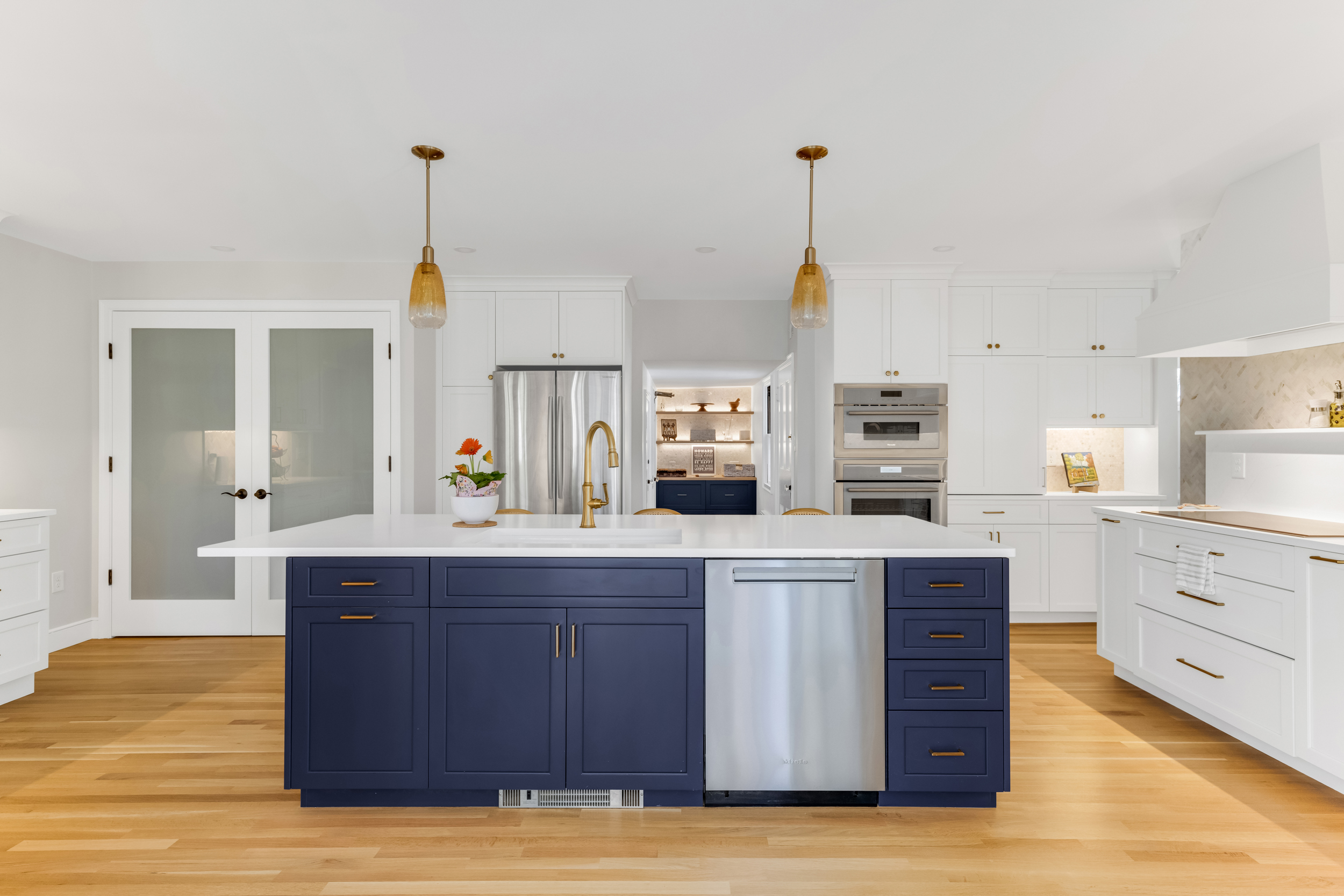
Islands are a must-have feature for many kitchens. Where space allows, an island (or sometimes two) takes center stage in the room. Islands offer extra workspace, additional cabinet storage, and seating. Depending on size and layout, island seating works for casual dining, entertaining, or homework. Some homes use island seating more often than a kitchen or dining table. Here's a guide to picking the right arrangement.
Size and Layout
Examine your available space and find the layout that meets your requirements. An experienced designer takes accurate measurements and finds the layout that fits your needs. In some large kitchens, the design may include more than one island, with one used for workspace and the other for dining and entertaining. If a smaller island or peninsula is a better fit, you may limit island seating to a couple of stools as a breakfast bar. We dig into kitchen layout in our layout guide.
Direction and Purpose
Another decision is what direction the island will face and what gets built into it (sink, cooktop, prep zone). When working at the island, do you want to face into the dining or living area, or look out a window?
Seating Arrangements
The shape and positioning of the island, and how you plan to use it, informs the seating arrangement. You may want seating along one side, across from where you'll work. Or design the island with one section for work and a separate section for dining: a bi-level island or a T- or L-shape gives distinct zones for each function.
You can also distinguish work and dining space by using different countertop materials. Granite or quartz for workspace, a wood tabletop section for dining.
Style
The island is at the center of the kitchen and influences the overall style. The cabinetry, countertop, and barstools or chairs should complement the kitchen's overall style — traditional, contemporary, farmhouse, casual, or formal.
Form and Function
Is the island seating for occasional entertaining, or daily use for family meals and homework? If it's daily use, full chairs may work better than barstools for comfort over longer periods. If you have kids, consider how easy the chairs are to clean and whether kids can climb in and out. A bi-level island with a lower countertop section makes seating more accessible for younger children.
Talk through island seating with a designer
If you're planning a kitchen with island seating, we'd love to talk through what fits your home.
Schedule a showroom visit at our 5,000 square foot showroom in Norwell. No pressure, just a real conversation about your home.
Transitions Kitchens, Baths & Remodeling
433 Washington St, Norwell, MA
(781) 871-0881


.jpg)