
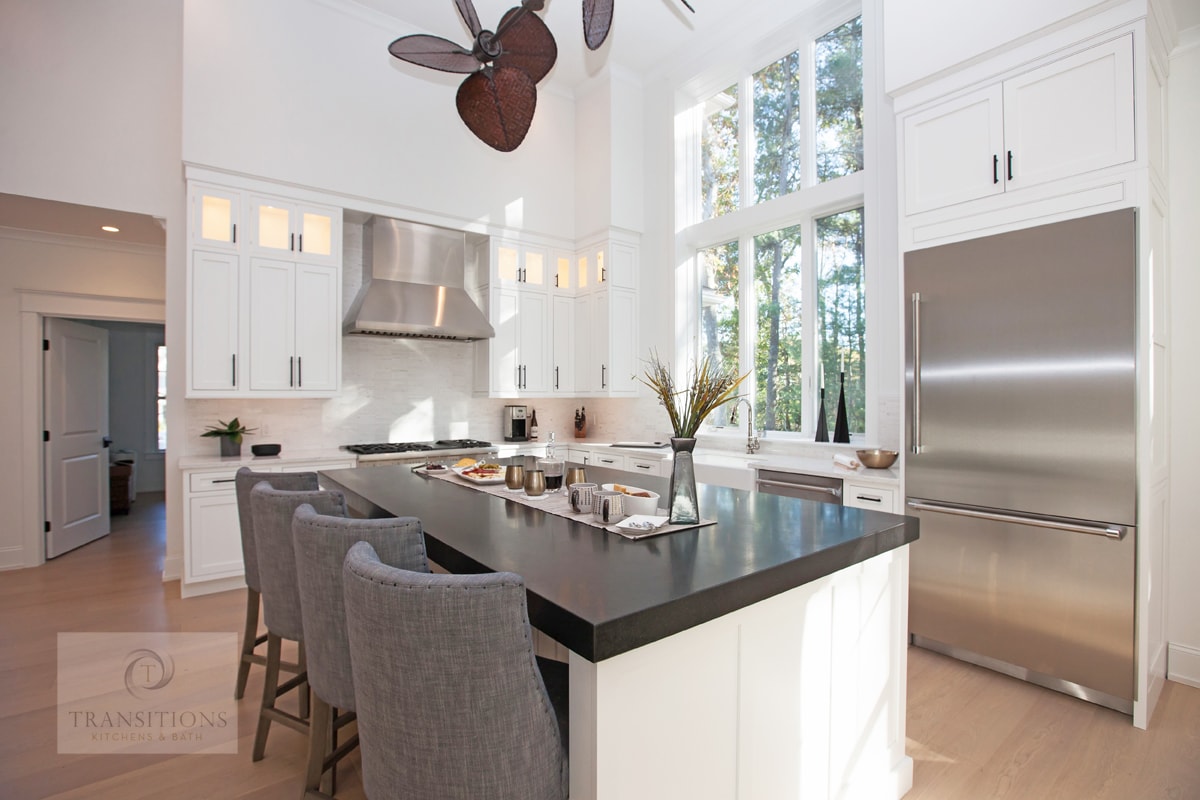
Designing a kitchen remodel involves choosing the right flooring, fixtures, and fittings, but a good lighting scheme is what maximizes its potential. Overhead, floor, and pendant lights give the optimal mix of light sources in a kitchen. Adding under-cabinet or in-cabinet lighting provides the warm atmosphere that makes a kitchen feel finished. This lighting also makes it easier to work on countertops and illuminates anywhere from deep drawers to display cabinets.
Ideally, under-cabinet lighting is installed as part of the kitchen's lighting plan, but it can be added afterward. The lighting saves energy, especially with LED bulbs. It also adds value: details like under-cabinet lighting can help sell a home faster than a dimly lit kitchen. We dig into broader lighting choices in our kitchen lighting guide.
Types of under-cabinet lighting
Plug-in lights are straightforward to install. They attach to the underside of the cabinet, with the wire tacked along to the nearest electrical outlet. Tape or rope LED lights are long but need a separate switch for each strip.
Wireless lighting includes fluorescent strips, track lights, or puck halogen lights that are battery-operated. Keep these bulbs to a low wattage to avoid overheating. Keep batteries on hand, and don't forget to turn them off when not in use.
Integrated lighting is built into the cabinets, so it has to be factored in at the design stage. Fixtures like puck lights are installed directly into the cabinet. Custom track or strip lighting fits exactly where needed. All integrated lighting should be installed by a professional for safety. Plug-in or wireless add light quickly to existing cabinets, but integrated lights are the preferred option for both style and function.
Choosing the right bulb
LED bulbs are popular because they're efficient, long-lasting, and cool to the touch. They cost more upfront but have the lowest running cost.
Incandescent and halogen bulbs are bright, warm, and cheap, but neither is sustainable due to high energy consumption. Their tendency to overheat means a dimmer control is needed.
Fluorescent lights have improved significantly. Modern versions are slimmer with a more natural cool-toned light that lasts. Relatively cheap, though not as eco-friendly as LED.
Xenon bulbs are more expensive but have a very long life. They burn bright and not too hot and work well dimmed. Not as energy-efficient as LED and fluorescent.
Color and brightness
Get the bulb color, temperature, and brightness right or the kitchen will read either cold or too yellow. If your color scheme is warm, choose warm lighting; cooler for white, gray, or blue-toned remodels. LED lights are naturally cool-toned but can be altered with a colored lens. Brightness depends on the finish of your cabinetry and countertops. If the countertop is highly reflective, frosted task lighting prevents glare.
Placement
Under-cabinet lighting goes under the upper cabinets and toward the front to fully illuminate the countertop. Integrated lighting covers large areas; puck lights need to be evenly spaced (too far apart and you get shadows). Including under-cabinet lights at the design stage lets you plan how to conceal wires and exactly where to position fixtures.
Talk through cabinet lighting with a designer
Properly done, under-cabinet lighting finishes a kitchen. If you're planning a remodel and want to talk through lighting placement and bulb choice, we'd love to talk.
Schedule a showroom visit at our 5,000 square foot showroom in Norwell. No pressure, just a real conversation about your home.
Transitions Kitchens, Baths & Remodeling
433 Washington St, Norwell, MA
(781) 871-0881


.jpg)