
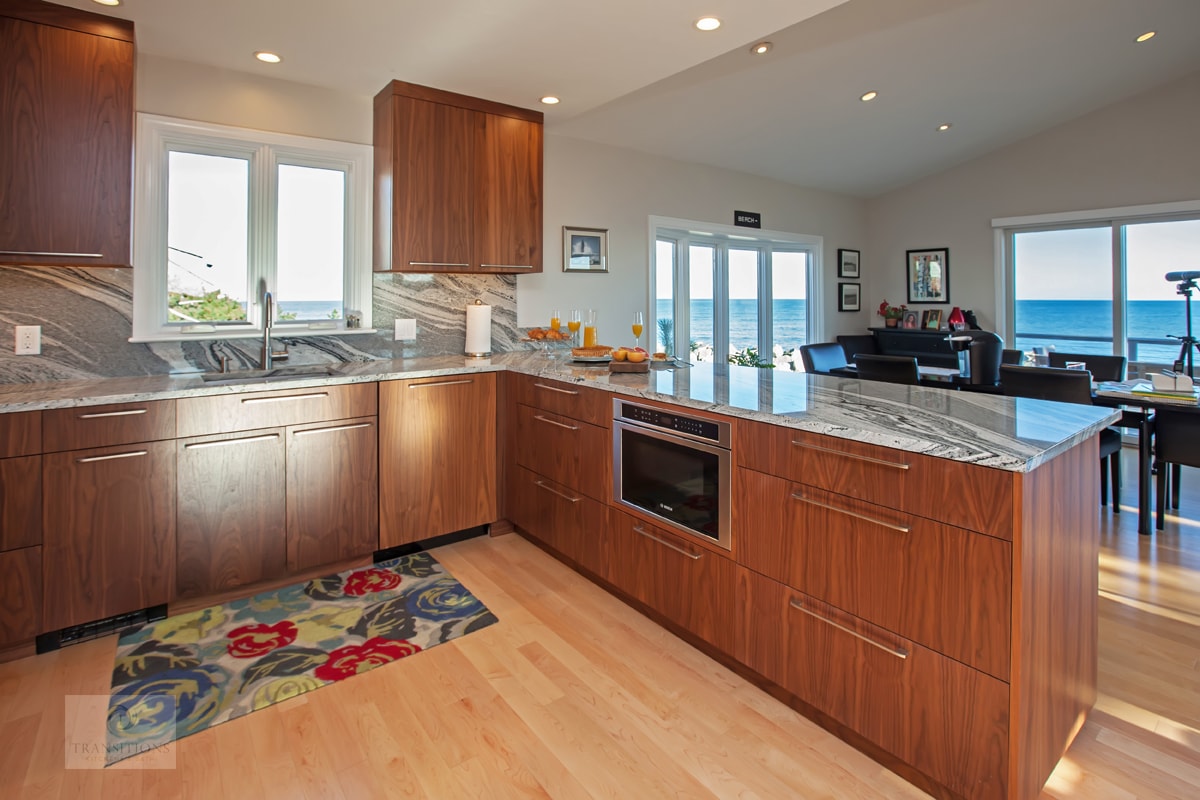
The cabinet door is the part of a kitchen you see and touch every day. While the cabinet interior is for storage, the front is purely aesthetic and expresses your style. Your choice of cabinets should be influenced by your home's interior design style, and the cabinet style will guide the rest of the kitchen. Whether you're doing a complete kitchen remodel or just changing cabinet doors, there's a style to give the kitchen real impact.
Terminology around cabinet door styles can be confusing and is often used interchangeably. The overview below covers the major types and the terms typically used. The best approach is still to talk to a designer, browse ideas online, and visit a showroom to look at samples in person. We compare the cabinet lines we carry in our cabinetry guide.
1. Flat or Slab Style
Slab cabinets are sleek and low-maintenance. They come with or without handles, so you can focus on high-quality stained wood, bold color, or quirky hardware. Their minimalist appearance suits contemporary kitchens.
2. Shaker and Other Recessed Panel
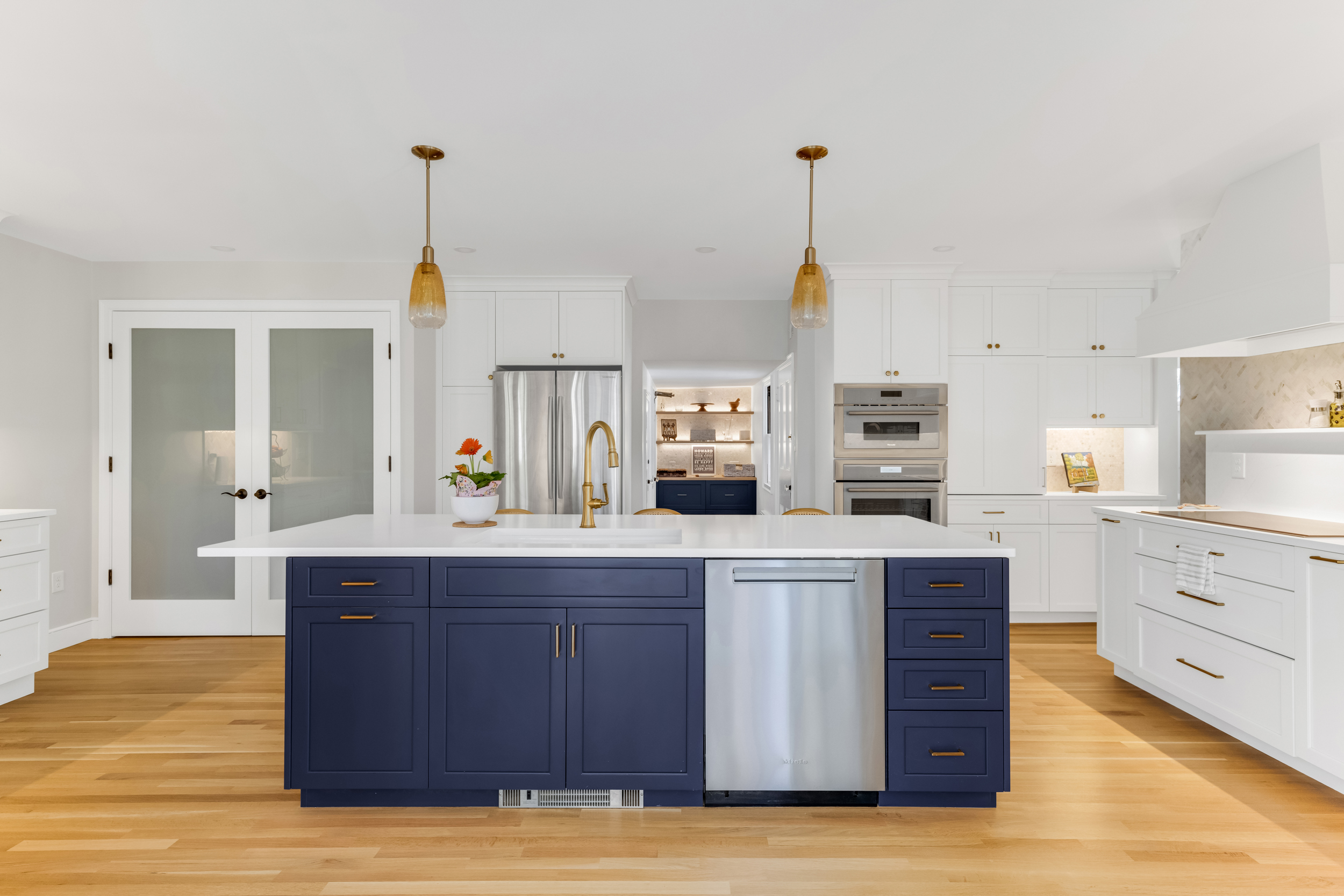
The understated, elegant Shaker cabinet door is a classic, dating back to the 1800s when the Shaker community made high-quality, simple furniture. Sometimes referred to as flat panel or recessed panel, Shaker cabinets look good both in natural wood and painted finishes. The central board, framed by four slats, is simple with no ornate features. They influenced Scandinavian design and fit beautifully in Scandi or modern kitchens, as well as understated transitional designs. Other recessed panel styles feature a flat central panel with a beaded frame for a slightly more decorative look.
3. Beadboard
If you love a rustic kitchen, look at beadboard cabinets. Similar to Shaker doors but with a beadboard insert, they suit elements like farmhouse sinks and flagstone floors. The downside is maintenance: they require more cleaning between slats.
4. Raised Panel
Four pieces of wood frame a central panel that's raised with a profile or contour. Pairs with a variety of wood species and is more typically seen in traditional kitchens, though it can suit transitional designs too. The central panel can be more or less ornate. Cathedral-style doors are a raised panel variant with a single arch at the top, or another at the bottom. Due to the deep carving required, only wood or thermafoil MDF are suitable for this door.
5. Glass Front
Glass door cabinets are a flat panel variant with glass as the central panel. They fit Hamptons and country-style kitchens, breaking up heavy wood cabinetry and giving the room an airy feel. Or choose a more decorative mullion style where the glass panels are broken up by strips of wood. Depending on the wood and glass type, glass doors can suit any style. Curate the cabinet's contents to display favorite items, or choose frosted glass to hide them.
6. Sliding
Sliding doors are less common but can be perfect for a smaller kitchen. Simple wood doors work in a Scandi style, or try a glossy finish in burnt orange for a retro vibe. A mini barn-door style sliding door also works for a rustic look.
Door overlay options
Two ways to set the door onto the cabinet. Inset cabinet doors sit inside the cabinet, giving a seamless look but reducing storage space. They're more expensive (custom-built, with more pulls and visible hinges). Full Overlay is a sleek, contemporary design with no cabinet frame visible. Partial Overlay exposes some of the frame beside the doors for a more traditional look.
Talk through cabinet doors with a designer
If you're planning a kitchen and want to compare cabinet door styles in person, we'd love to talk.
Schedule a showroom visit at our 5,000 square foot showroom in Norwell. No pressure, just a real conversation about your home.
Transitions Kitchens, Baths & Remodeling
433 Washington St, Norwell, MA
(781) 871-0881

.jpg)