
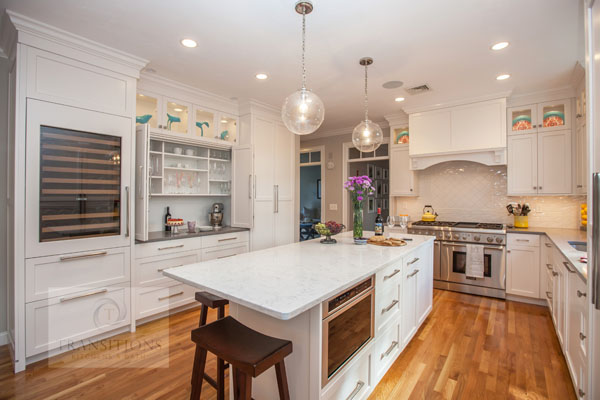
The range hood is an essential component of any kitchen. Cooking produces odors, moisture, smoke, and grease. These have to be dealt with, or they affect air quality, surrounding cabinets, and other surfaces. The hood ventilates these by-products to keep the kitchen clear while cooking, and can also be a style focal point. Here are five questions to consider when selecting one.
1. What are your cooking requirements?
Before shopping, consider use. Will you use the kitchen for occasional meals or several times a day? This, along with the size of your range and whether you use gas or electric, helps determine the fan you need. Fan power is measured in cubic feet per minute (CFM); higher CFM moves more air per minute.
2. What about noise levels?
Noise is measured in sones or decibels. Many fans have multiple settings, letting you vary fan level (and therefore noise) depending on what you're cooking. The more you spend, the more likely you are to get a better-performing and quieter fan. The best way to gauge loudness is to try different models in a showroom.
3. What's your available space?
Consider the capture area where the hood will be located. The width should match the range below, and the depth should cover the back burners and at least half of the front burners. Mounting height (the distance between the filter in the hood and the burners below) depends on hood style and fan power. The larger the hood, the more obtrusive it will be on surrounding cabinets and your ability to work at the range. Size also depends on style; a rectangular stainless chimney has a different footprint than a decorative oval hood or a custom hood framed in matching cabinetry.
4. Ducted or non-ducted?
Hoods either vent smoke and moisture inside or outside. The best option is a ducted hood, which vents outside and removes all pollutants from the house. A non-ducted hood is typically more economical. In some cases, like an apartment building, non-ducted may be the only solution.
5. What style do you want?
Undercabinet hoods attach to the underside of the cabinet above the range.
Wall-mounted hoods mount to the wall above the range instead of cabinets.
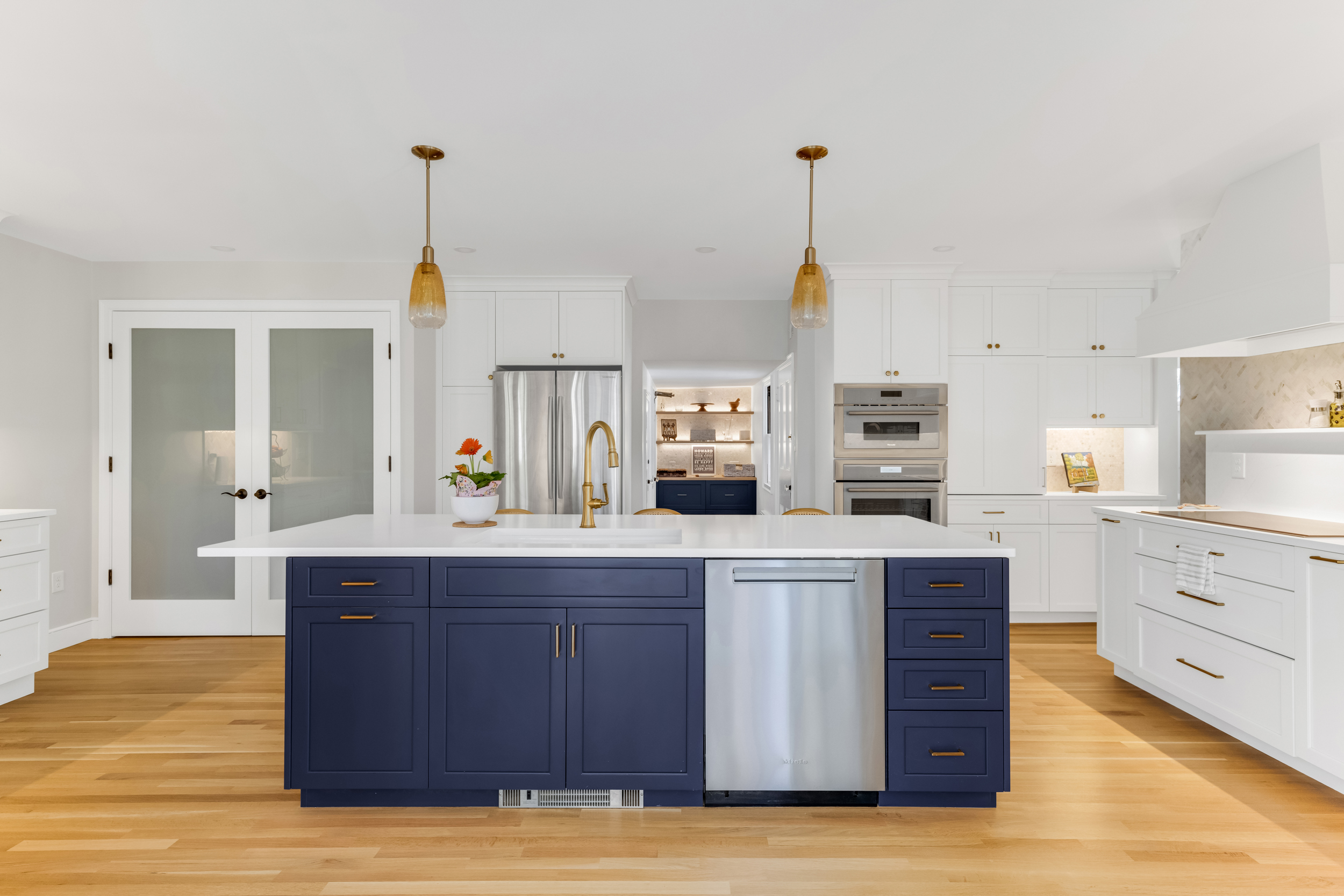
Ceiling-mounted hoods are typically used where the range is on the island. With no wall to attach to, the hood extends from the ceiling.
Other options include downdraft ventilation hoods and ventilation power packs. Style ranges from contemporary low-profile hoods to more elaborate architectural styles. Range hoods are commonly found in stainless steel or with a wood surround to match cabinetry. Some incorporate glass, copper, or stone, or use a bold color to become a statement piece. We dig into appliances broadly in our smart kitchen guide.
Talk through range hoods with a designer
If you're planning a kitchen and want to talk through hood selection, we'd love to talk.
Schedule a showroom visit at our 5,000 square foot showroom in Norwell. No pressure, just a real conversation about your home.
Transitions Kitchens, Baths & Remodeling
433 Washington St, Norwell, MA
(781) 871-0881

.jpg)